

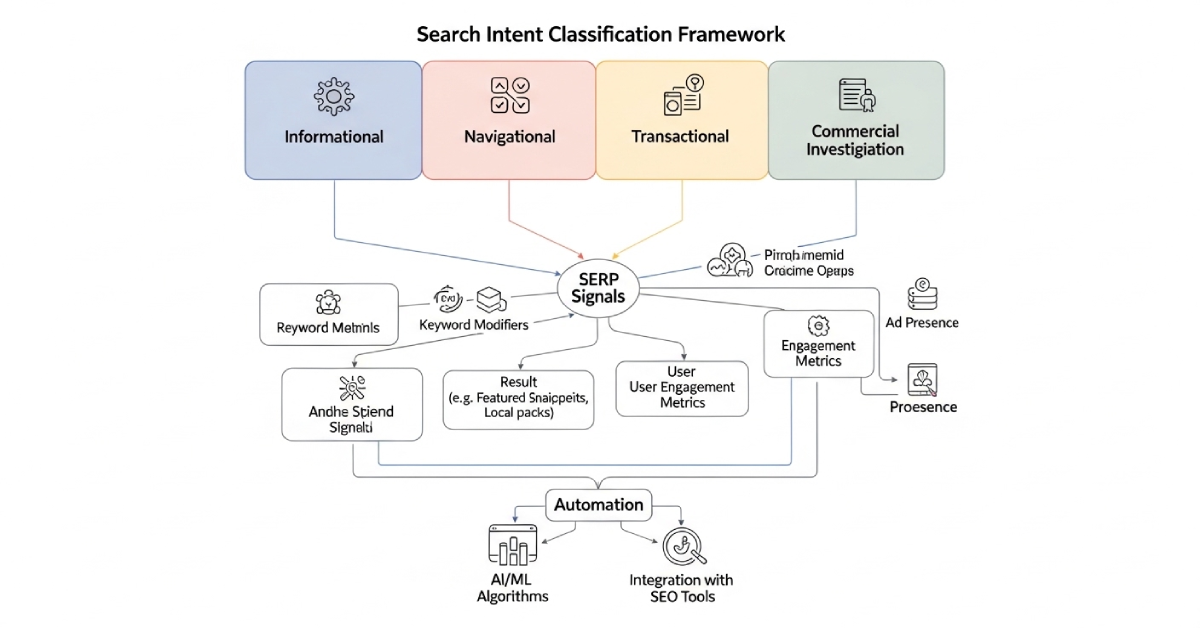
Understanding search intent classification is one of the most important skills in modern SEO. Without it, you’re essentially guessing what users want when they type a query into Google. With it, you can create content that actually matches what searchers are looking for — and that’s what Google rewards in 2026.
This guide explains the four main types of search intent, how to identify intent from search results, and why this matters for your SEO strategy.
I’m Zohanuddin Shaikh, an SEO consultant based in Karachi, Pakistan. I’ve worked in SEO for 8 years, and search intent has become more important every year. You can read more about my background on the About Us page.
What Is Search Intent Classification?
Search intent classification is the process of identifying what a user is actually trying to accomplish when they enter a search query.
When someone types “best running shoes” into Google, they’re not just looking for words on a page. They want to compare options before buying. When they type “how to tie running shoes,” they want a tutorial. These are completely different needs — even though both queries contain the word “running shoes.”
Search intent classification helps you:
- Match your content to the right type of user need
- Understand why some pages rank and others don’t
- Avoid creating content that targets the wrong intent
- Improve your click-through rates from search results
For SEO professionals, classifying intent is now one of the first steps in keyword research — before writing any content.
The 4 Types of Search Intent
Google’s Search Quality Rater Guidelines identify four main types of search intent. Each type represents a different user goal.
1. Informational Intent (Know)
What users want: To learn something or find information.
Common query patterns:
- “what is…”
- “how does…”
- “why is…”
- “guide to…”
- “tutorial…”
- “tips for…”
Examples:
- “what is SEO?”
- “how does Google rank pages?”
- “guide to keyword research”
SERP characteristics:
- Blog posts and guides dominate
- Featured snippets often appear
- “People Also Ask” boxes are common
- Video carousels for visual topics
Best content type: In-depth articles, guides, tutorials, educational videos.
2. Navigational Intent (Website)
What users want: To reach a specific website or page they already know about.
Common query patterns:
- Brand names
- “[Brand] login”
- “[Brand] customer service”
- Specific page names
Examples:
- “facebook login”
- “amazon support”
- “youtube studio”
SERP characteristics:
- The intended website ranks #1
- Brand logos appear
- Site links show under the main result
- Few competing search results
Best content type: Don’t compete with navigational queries for brands you don’t own. Focus on optimizing your own brand for navigational queries.
3. Commercial Intent (Investigation)
What users want: To research options before making a purchase decision.
Common query patterns:
- “best…”
- “top…”
- “vs”
- “review”
- “comparison”
- “alternatives to…”
Examples:
- “best SEO tools”
- “Ahrefs vs SEMrush”
- “WordPress hosting reviews”
SERP characteristics:
- Comparison articles dominate
- Review sites rank well
- “Best of” listicles appear
- Mixed with some product pages
Best content type: Comparison articles, detailed reviews, “best of” lists, and alternative comparisons.
4. Transactional Intent (Do)
What users want: To complete an action — usually buying something.
Common query patterns:
- “buy…”
- “purchase…”
- “for sale”
- “discount…”
- “coupon…”
- “[product name] price”
Examples:
- “buy iphone 15”
- “macbook pro discount”
- “spotify premium subscription”
SERP characteristics:
- Product pages dominate
- Google Shopping ads appear at top
- E-commerce sites rank well
- Direct purchase options shown
Best content type: Product pages, category pages, special offer pages.
How to Identify Search Intent from SERPs
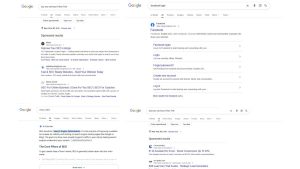
The fastest way to identify intent is to actually look at what Google is showing for that query. Google has already done the analysis — you just need to interpret the results.
Step 1: Look at the Top 10 Ranking Pages
Open an incognito browser and search your target keyword. Look at the first 10 results carefully:
- Are they mostly blog articles? → Informational intent
- Are they product pages? → Transactional intent
- Are they comparison articles? → Commercial intent
- Is there one specific brand site? → Navigational intent
If 7 out of 10 results are one type, that’s your dominant intent.
Step 2: Check the SERP Features
Google adds specific features based on detected intent:
SERP Feature |
Likely Intent |
|---|---|
| Featured Snippet | Informational |
| People Also Ask | Informational |
| Google Shopping Ads | Transactional |
| Local Pack (Map) | Local/Visit |
| Video Carousel | Informational (visual) |
| Knowledge Panel | Navigational |
| Image Pack | Informational/Visual |
Step 3: Read the Top 3 Page Titles
The wording of top-ranking page titles reveals intent:
- “How to…” → Informational
- “Best…” or “Top 10…” → Commercial
- “Buy…” or “Price…” → Transactional
- Brand name alone → Navigational
Step 4: Check Content Length and Format
- Short pages (under 500 words): Often transactional
- Long guides (2,000+ words): Often informational
- Comparison tables: Commercial
- Product specifications: Transactional
Mixed Intent: When Queries Have Multiple Meanings
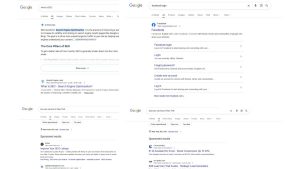
Not every query has a clear single intent. Many queries have mixed intent—multiple possible meanings.
Example: “iPhone 15”
This query could mean:
- Information about iPhone 15 (Informational)
- Reviews of iPhone 15 (Commercial)
- Buy iPhone 15 (Transactional)
- Apple’s iPhone 15 page (Navigational)
For mixed-intent queries, Google shows mixed results—some product pages, some reviews, some news articles. The result page reflects this uncertainty.
How to handle mixed intent:
- Identify the dominant intent (the majority of top results)
- Create content matching the dominant intent
- Address secondary intents within your main content (e.g., a review can mention pricing)
- Don’t try to satisfy all intents in one page—you’ll satisfy none
Why Search Intent Classification Matters for SEO
In 2026, matching search intent is more important than keyword optimization. Here’s why:
Google Rewards Intent Match
Google’s algorithm uses behavioral signals to evaluate whether your page satisfies user intent:
- Click-through rate — Does your title match what users want?
- Dwell time — Do users stay on your page?
- Pogo-sticking—Do users immediately return to search results?
- Task completion — Do users finish what they came for?
When your content matches intent, these metrics improve. Google sees this and rewards your page with better rankings.
Wrong Intent = Wasted Effort
If you write a 5,000-word guide for a transactional query, you’ll struggle to rank no matter how good the content is. Google’s analysis says users want a product page, not an article.
This is the #1 mistake I see in SEO. People research keywords by volume and competition but don’t check intent. They create informational content for commercial keywords or product pages for informational queries. The result: poor rankings despite good content.
Better Conversions Through Intent Match
When your content matches intent, users actually convert:
- Informational intent → Newsletter signups, content engagement
- Commercial intent → Affiliate clicks, comparison decisions
- Transactional intent → Purchases, sales
- Navigational intent → Brand engagement
Matching intent isn’t just about rankings. It’s about getting business results from your traffic.
Search Intent Classification at Scale
If you have a large site with hundreds of keywords, manually classifying each one is time-consuming. Here are practical approaches at scale:
Method 1: Keyword Modifier Patterns
Use rules based on common modifiers:
- Informational modifiers: “what,” “how,” “why,” “guide,” “tutorial”
- Commercial modifiers: “best,” “top,” “vs,” “review,” “alternative”
- Transactional modifiers: “buy,” “price,” “discount,” “deal”
- Navigational modifiers: Brand names
This rule-based approach handles 60-70% of queries automatically.
Method 2: SERP Analysis Tools
Several tools attempt automated intent classification:
- SEMrush — Shows intent label for each keyword
- Ahrefs — Provides intent indicators in Keywords Explorer
- Surfer SEO — Analyzes top SERPs for intent patterns
These tools speed up classification but aren’t always accurate. Always verify by actually looking at the SERP.
Method 3: Manual SERP Review (Most Accurate)
For your most important keywords, manually review the SERP. This takes 30-60 seconds per keyword but gives the most accurate classification.
My approach for client work:
- Identify top 50 priority keywords
- Manually check SERPs for these
- Use rules-based classification for the remaining keywords
- Re-verify quarterly because intent can shift
Common Intent Classification Mistakes
After 8 years in SEO, here are the mistakes I see repeatedly:
Mistake 1: Classifying by Keyword Alone
You can’t classify intent just by reading a keyword. “Apple” could be the fruit or the company. Always check the actual SERP.
Mistake 2: Ignoring Mixed Intent
Many queries have mixed intent. Forcing them into a single category misses opportunities and creates content that doesn’t fully match user needs.
Mistake 3: Not Updating Classifications
Intent shifts over time. A query that was informational 2 years ago might be commercial now as the market matures. Re-check intent classifications quarterly.
Mistake 4: Optimizing for Wrong Intent
The biggest mistake: creating informational content for transactional queries (or vice versa). Your content won’t rank no matter how good it is.
Mistake 5: Trusting Tools Blindly
Tools provide intent estimates, but they’re not always accurate. Always verify with manual SERP review for important keywords.
For more on how I approach content quality and the editorial process behind this site, see my Editorial Team page.
FAQs
1. What is search intent classification in simple terms?
Search intent classification is figuring out what a user actually wants when they search for something. For example, someone searching “best laptop” wants comparisons, not just any laptop information. Classifying intent helps you create content that matches what users are really looking for.
2. What are the 4 types of search intent?
The four types are: Informational (learning something), Navigational (finding a specific site), Commercial (researching before buying), and Transactional (ready to buy or take action). Google’s Search Quality Rater Guidelines also call these “Know,” “Website,” “Investigation,” and “Do.”
3. How do I identify search intent for my keywords?
Open an incognito browser, search your keyword, and look at the top 10 results. If they’re mostly blog articles, the intent is informational. If they’re product pages, it’s transactional. Mostly comparison articles? Commercial intent. One specific brand site? Navigational.
4. Can a single keyword have multiple search intents?
Yes. Many keywords have mixed intent where multiple meanings are possible. For example, “iPhone 15” could mean information about the phone, reviews, or buying it. Google’s SERP usually reflects this by showing different types of results for mixed-intent queries.
5. What is the difference between commercial and transactional intent?
“Commercial intent” means the user is researching before buying—looking at reviews, comparisons, or alternatives. Transactional intent means the user is ready to take action — usually purchasing. “Best laptops 2026” is commercial; “buy MacBook Pro M3” is transactional
6. Does Google use search intent as a ranking factor?
Google doesn’t have a specific “intent matching” ranking factor, but it uses behavioral signals (clicks, dwell time, bounce rate) to evaluate whether pages satisfy user intent. Pages that match intent get better engagement signals and tend to rank higher over time.
7. How often should I review search intent classifications?
I recommend reviewing your most important keywords’ intent classifications every 3-6 months. Search intent can shift as markets mature, new technologies emerge, or user behavior changes. What was informational 2 years ago might be commercial today.
8. What SERP features indicate informational intent?
Featured snippets, People Also Ask boxes, video carousels, and knowledge panels typically indicate informational intent. When Google shows these features, it expects users want to learn or understand something rather than buy or take action.
9. Can I optimize one page for multiple intents?
It’s usually better to create separate pages for different intents. However, a primary page can address secondary intents in dedicated sections. For example, a comparison article (commercial) can include pricing information and purchase links (transactional) without losing its primary focus.
10. What tools help with search intent classification?
SEMrush, Ahrefs, and Surfer SEO all provide automated intent classification. However, these tools aren’t 100% accurate. Always verify intent by manually reviewing the actual SERP for important keywords. Manual SERP review takes 30-60 seconds per keyword and is the most accurate method.
Final Thoughts
Search intent classification has become a fundamental skill in modern SEO. In 2026, ranking well isn’t about keyword density or backlink quantity — it’s about creating content that genuinely matches what users are searching for.
The four-category framework (informational, navigational, commercial, transactional) provides a solid foundation. But real-world classification requires actually looking at SERPs and understanding the nuances of mixed intent.
For practical implementation:
- Start with manual SERP review for your top keywords
- Use rules-based classification for bulk keyword sets
- Verify intent classifications quarterly
- Match content type and format to the dominant intent
- Don’t trust tools blindly — always verify with real SERPs
All information in this article has been verified against Google’s official documentation and current SERP patterns. For more on how I verify information, see my Fact-Checking Policy.
If you have specific questions about classifying intent for your keywords or want to discuss SEO challenges, feel free to reach out via my Contact page. I respond to legitimate questions within 48 hours. If you spot any factual errors in this guide, please let me know—I aim to verify and correct errors promptly, as detailed in my Correction Policy.
For more SEO guides, browse the rest of Search Engine Realm.
Last Updated: May 17, 2026