
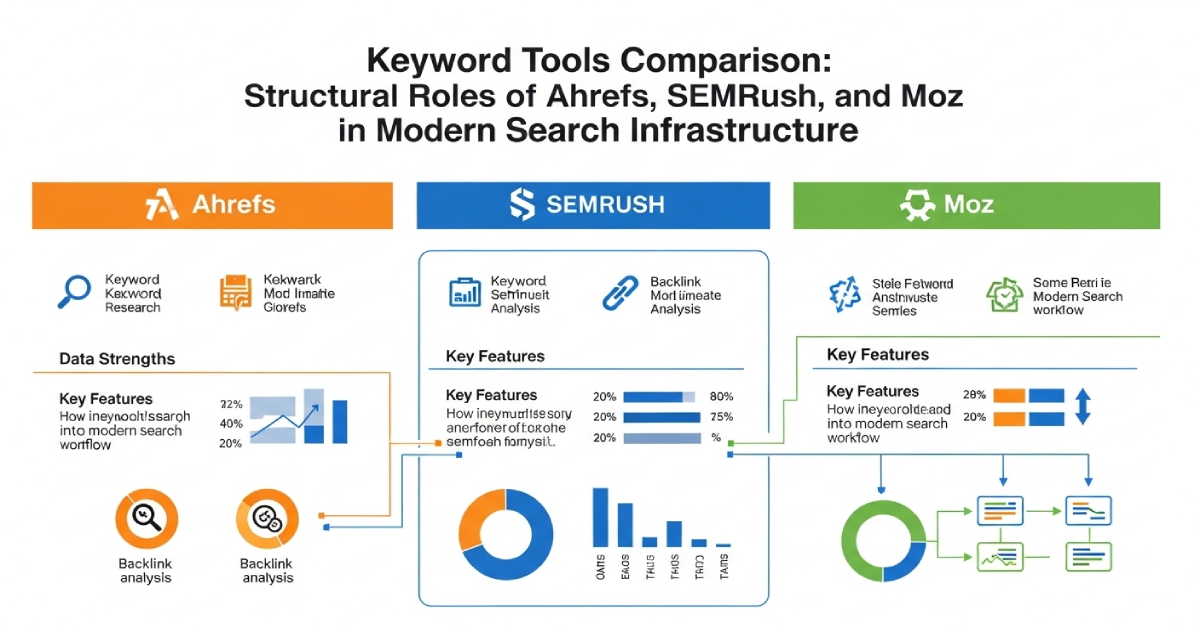
Choosing between Ahrefs vs SEMrush vs Moz is one of the most common decisions in SEO. All three are popular paid keyword research tools, each priced over $99/month. Picking the wrong one can mean wasted money—and potentially missing important data your business needs.
This Ahrefs vs SEMrush vs Moz comparison covers pricing, features, data quality, and specific use cases. The goal is to help you decide which one (or none) makes sense for your situation in 2026.
I’m Zohanuddin Shaikh, an SEO consultant based in Karachi, Pakistan. I’ve worked in SEO for 8 years and have tested all three tools over time. This comparison reflects what each tool actually does well, where they fall short, and which one might fit your needs.
Quick Summary: Which Tool to Pick
If you’re short on time, here’s the summary of Ahrefs vs SEMrush vs Moz:
- Pick Ahrefs if you prioritize accurate backlink data and clean interface
- Pick SEMrush if you also do paid advertising (PPC) work
- Pick Moz if you’re a beginner or have a limited budget
- Pick none if you’re just starting—use free tools first
The rest of this guide explains why.
Ahrefs vs SEMrush vs Moz: Pricing Comparison (2026)
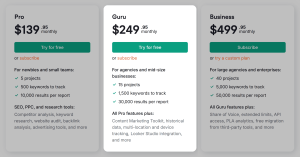
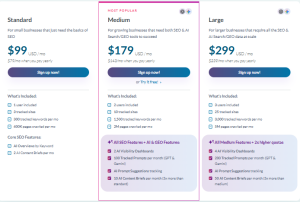
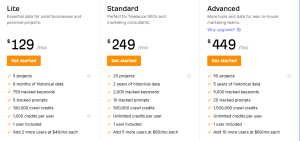
Pricing is usually the first factor people consider when comparing Ahrefs vs SEMrush vs Moz. Here are the current monthly prices for entry-level plans:
Tool |
Starting Price |
Mid-Tier Plan |
Free Trial |
| Ahrefs Lite | $129/month | $249/month | $7 for 7 days |
| SEMrush Pro | $139/month | $249/month | 7 days free |
| Moz Pro Standard | $99/month | $179/month | 30 days free |
ahrefs vs semrush vs mozahrefs vs semrush vs mozahrefs vs semrush vs moz
Note on pricing for Pakistani users:
These prices are in USD. At current exchange rates (approximately PKR 280 per USD), you’re looking at PKR 27,000+ per month for entry-level subscriptions. International payment methods (Payoneer, Wise, credit card) are required for all three platforms.
Important consideration: Annual subscriptions typically save 20-30%. Monthly plans are flexible but more expensive long-term.
Ahrefs: Features and Strengths
This tool built its reputation primarily around backlink data. Their crawler (AhrefsBot) is one of the most active on the web.
Key Ahrefs Features
- Site Explorer — Comprehensive domain analysis
- Keywords Explorer — Keyword research with parent topic clustering
- Site Audit—Technical SEO crawler
- Rank Tracker — Position tracking for selected keywords
- Content Explorer—Find popular content in any niche
- Web Explorer—Search the entire indexed web
Where Ahrefs Stands Out
Backlink data accuracy is Ahrefs’s strongest selling point. Their backlink index is updated frequently, and AhrefsBot crawls more aggressively than competitor crawlers. This generally means fewer missed links.
The interface is clean and intuitive—easier to navigate than SEMrush for users focused primarily on SEO research.
Content Explorer is particularly useful for finding what content is performing well in your niche. You can filter by traffic, backlinks, social shares, and more.
Where Ahrefs Falls Short
- No advertising data—If you also do Google Ads work, Ahrefs won’t help
- Limited social listening—Almost no social media analytics
- Expensive team plans—Adding multiple users gets costly quickly
- No keyword campaign management—less suited for tracking large keyword sets
SEMrush: Features and Strengths
SEMrush positions itself as an all-in-one digital marketing platform. In any Ahrefs vs SEMrush vs Moz comparison, SEMrush covers more ground than the others but isn’t always as deep in specific areas.
Key SEMrush Features
- Domain Overview — Quick competitive analysis
- Keyword Magic Tool — Extensive keyword research
- Position Tracking — Daily rank updates
- Site Audit—Technical SEO checker
- Backlink Analytics—Link profile analysis
- PPC Research — Paid advertising data
- Social Media Tracker—Social monitoring
- Project Management—Multi-client dashboards
Where SEMrush Stands Out
SEMrush is the strongest tool if you do both SEO and PPC work. It shows actual ad copy, estimated ad spend, and PPC keyword data—features Ahrefs lacks entirely.
For agencies managing multiple clients, SEMrush’s project management features are valuable. Each client gets a separate project with position tracking, automated reports, and site audits.
The Keyword Magic Tool generally produces more keyword variations than Ahrefs’s Keywords Explorer, which can be helpful for content brainstorming.
Where SEMrush Falls Short
Backlink data accuracy—Sometimes misses links that Ahrefs catches
Interface complexity—Too many features can be overwhelming
Slower domain analysis—Site Explorer in Ahrefs is faster
Daily rank tracking limits—Limited keywords in entry-level plan
Moz: Features and Strengths
Moz is the original SEO tool company. In an Ahrefs vs SEMrush vs Moz comparison, Moz offers something the others don’t: beginner-friendliness.
Key Moz Features
- Moz Pro Dashboard—Simple SEO overview
- Keyword Explorer—Keyword research with Priority Score
- Link Explorer—Backlink analysis
- Rank Tracker—Position tracking
- On-Page Grader—Page-level SEO scoring
- MozBar—Free Chrome extension
- Domain Authority (DA) — Their proprietary metric
Where Moz Stands Out
Moz’s biggest strength is accessibility. The interface is less intimidating than Ahrefs or SEMrush. New SEO learners often find Moz easier to understand.
Their free tools deserve mention. MozBar (Chrome extension) is widely used for quick domain authority checks. The free Keyword Explorer allows limited queries without a subscription.
The 30-day free trial is the most generous in the industry—actually enough time to thoroughly evaluate the tool.
Moz’s educational content (Whiteboard Friday videos, SEO Learning Center) remains unmatched. Beginners often learn SEO fundamentals through Moz content.
Where Moz Falls Short
- Smaller keyword database—Many keywords have no data
- Slower data refresh—sometimes weeks behind competitors
- Limited backlink index—Significantly fewer links indexed
- Domain Authority confusion—DA isn’t a Google ranking factor, but people treat it like one
- Fewer advanced features—Lacks deep competitive analysis tools
Ahrefs vs SEMrush vs Moz: Feature-by-Feature Comparison
Here’s a direct feature comparison for Ahrefs vs SEMrush vs Moz:
| Feature | Ahrefs | SEMrush | Moz |
| Keyword Database Size | 28+ billion | 25+ billion | 1 billion+ |
| Backlink Index | 35+ trillion | 43+ trillion | 40+ trillion |
| Search Volume Data | ✅ Strong | ✅ Strong | ⚠️ Limited |
| Keyword Difficulty Score | ✅ KD 0-100 | ✅ KD 0-100 | ✅ Priority 0-100 |
| SERP Analysis | ✅ Strong | ✅ Strong | ⚠️ Basic |
| Backlink Audit | ✅ Best | ✅ Good | ⚠️ Limited |
| Site Audit/Technical SEO | ✅ Yes | ✅ Yes | ✅ Yes |
| Rank Tracking | ✅ Yes | ✅ Best | ✅ Yes |
| Content Gap Analysis | ✅ Best | ✅ Yes | ⚠️ Basic |
| PPC Data | ❌ No | ✅ Best | ❌ No |
| Social Media | ❌ No | ✅ Yes | ❌ No |
| Multi-Client Projects | ⚠️ Limited | ✅ Best | ⚠️ Limited |
| Free Tools | ⚠️ Limited | ⚠️ Limited | ✅ Best |
| API Access | ✅ Paid | ✅ Paid | ✅ Paid |
| Browser Extension | ✅ Yes | ✅ Yes | ✅ MozBar (free) |
Free Alternatives to Ahrefs, SEMrush, and Moz
Before paying $99-139/month for any of these tools, consider whether free alternatives can meet your needs. For many users—especially beginners and freelancers—they can.
Google Search Console (Free)
This is the most accurate source of data for your own website. Google Search Console shows:
- Keywords you actually rank for
- Real click-through rates
- Average ranking positions
- Indexing status
- Mobile usability issues
For your own site’s data, Google Search Console is more accurate than any tool in the Ahrefs vs SEMrush vs Moz comparison because the data comes directly from Google.
Google Search Console Performance report
Google Keyword Planner (Free)
Available with a free Google Ads account (no spending required). Provides:
- Search volume ranges
- Keyword ideas
- Competition levels for ads
The data is less detailed than paid tools but reliable since it comes from Google itself.
Ubersuggest Free Plan
Neil Patel’s tool offers 3 free searches per day. Provides:
- Basic keyword data
- Competitor analysis
- Limited site audit
Limited but useful for occasional research.
AnswerThePublic Free Tier
Question-based keyword research. Provides 3 free searches per day. Great for:
- Finding question-based keywords
- Understanding search intent
- Content topic ideation
Chrome Extensions (Free)
- MozBar—Domain authority checker
- SEOquake—Quick page audit metrics
- Keywords Everywhere — Search volume in SERPs ($1.50/month)
These extensions provide quick research capabilities without subscription costs
The Free Stack Strategy
For freelancers and beginners, here’s a workable strategy without paid tools:
- Google Search Console — Your site’s real data
- Google Keyword Planner—Volume research
- Ubersuggest free—Limited but useful
- AnswerThePublic free content ideas
- MozBar extension—Quick checks
This combination provides enough data to do effective SEO work, especially for smaller sites and individual freelancers.
Affiliate Disclosure: This article does not currently include affiliate links to any of these tools. For full transparency on how I handle product recommendations, affiliate relationships, and sponsored content, see my Ethics Policy.
Ahrefs vs SEMrush vs Moz: Which Should You Choose?
Based on user needs, here’s a decision framework for the Ahrefs vs SEMrush vs Moz question:
a. Choose Ahrefs If You
- Run an SEO-focused business or agency
- Need accurate backlink data
- Do content gap analysis regularly
- Don’t need PPC advertising data
- Want a clean, intuitive interface
- Have a budget of $129+ per month
b. Choose SEMrush If You
- Manage multiple clients
- Also do paid advertising (PPC) work
- Need automated client reporting
- Want all-in-one digital marketing tool
- Work as part of a team
- Have a budget of $139+ per month
c. Choose Moz If You
- Are learning SEO
- Have a smaller budget ($99/month)
- Need only basic features
- Value beginner-friendly interface
- Want excellent educational content
- Don’t need cutting-edge data
d. Skip All Three If You
- Are just starting in SEO
- Have monthly client revenue under $500
- Only manage 1-2 small sites
- Are still learning fundamentals
- Can use free tools effectively
Common Mistakes When Using These SEO Tools
Working in SEO over time, certain mistakes appear repeatedly when people use Ahrefs, SEMrush, or Moz. Here are the most important to avoid:
Mistake 1: Buying Too Early
Many beginners pay for Ahrefs at $129/month before having any clients or revenue. This puts financial pressure on learning. Better approach: build skills with free tools first, then upgrade when client revenue justifies the cost.
Mistake 2: Trusting Keyword Difficulty Blindly
A “low difficulty” keyword in any tool may be highly competitive in reality. KD scores are estimates based primarily on backlink data of ranking pages. Real difficulty includes content quality, brand authority, search intent matching, and other factors these tools can’t measure.
Mistake 3: Obsessing Over Domain Authority
Domain Authority (DA) is Moz’s proprietary metric. It is not used by Google as a ranking factor. A site with DA 30 can outrank a site with DA 60 if the content is better, the site has better technical SEO, or the content matches search intent more precisely.
Don’t make business decisions based primarily on DA scores.
Mistake 4: Using Multiple Paid Tools Unnecessarily
Some SEO professionals pay for Ahrefs + SEMrush + Ubersuggest + SE Ranking simultaneously. That’s $400+/month for overlapping data. Better strategy: master one paid tool deeply, supplement with free tools.
Mistake 5: Treating Tools as the Strategy
Tools provide data. They don’t write content, build backlinks, or optimize sites. The tools you use matter less than how strategically you apply the data they provide.
FAQs
1. Which is better: Ahrefs vs SEMrush vs Moz for beginners?
For complete beginners, Moz Pro is the most beginner-friendly choice in the Ahrefs vs SEMrush vs Moz lineup. Its 30-day free trial, simpler interface, and excellent educational content make it easier to learn. However, free tools (Google Search Console + Google Keyword Planner + Ubersuggest) are sufficient for initial learning. Move to paid tools once you have client revenue or specific advanced needs.
2. Can I rank well without paid SEO tools?
Yes. Many SEO professionals successfully rank pages using only Google Search Console, Google Keyword Planner, and free browser extensions. Paid tools accelerate research and provide deeper competitive analysis, but they don’t replace good content, proper on-page optimization, and quality backlinks.
3. How do Ahrefs, SEMrush, and Moz collect their data?
All three tools crawl the web continuously and monitor Google search results. They also use clickstream data (anonymized browsing behavior from millions of users) to estimate search volumes. This is why the same keyword shows different numbers across tools—each one uses different data sources, crawler patterns, and modeling approaches.
4. Why does Ahrefs show more backlinks than SEMrush?
Different crawlers find different links. AhrefsBot is generally more aggressive than SEMrush’s crawler at discovering backlinks. However, this doesn’t always mean Ahrefs is more accurate. Sometimes Ahrefs includes spam links that SEMrush correctly filters out. For comprehensive toxic link audits, checking both tools provides better coverage.
5. Is Moz Domain Authority a Google ranking factor?
No. Domain Authority (DA) is Moz’s proprietary metric created in 2012. Google has confirmed multiple times that they don’t use any external “domain authority” score. Use DA as a directional comparison metric only, not as proof of ranking ability.
6. Which tool has the most accurate search volumes?
None of the three tools is 100% accurate. Search volumes are estimates based on Google data and clickstream modeling. Ahrefs tends to be most consistent with Google Keyword Planner ranges. SEMrush sometimes overestimates volumes. Moz’s data updates less frequently. The most accurate data for your own site comes from Google Search Console.
7. Can I use the same tool for SEO and Google Ads?
SEMrush is the strongest for combined SEO and PPC work. It shows actual ad copy, estimated ad spend, and PPC keyword data. Ahrefs has minimal PPC features. Moz has almost no PPC functionality. If you need both SEO and Google Ads data, SEMrush is the practical choice.
8. Are there good free alternatives to these paid tools?
Yes. Google Search Console provides the most accurate data for your own site (free). Google Keyword Planner provides solid keyword research (free with Google Ads account). Ubersuggest offers 3 free searches per day. AnswerThePublic provides question-based research. MozBar is a free Chrome extension showing domain authority. Combined, these free tools handle most SEO research needs for beginners and freelancers.
9. What’s the best annual vs. monthly subscription strategy?
Annual subscriptions usually save 20-30% compared to monthly plans. However, commit annually only after using a tool monthly for at least 3 months. Many people pay for annual plans they don’t fully use. Start monthly to verify the tool fits your workflow before an annual commitment.
10. Which tool is best for local SEO?
For local SEO specifically, none of these three tools specialize in it. Better options for local SEO include Google Business Profile (free, essential), BrightLocal ($39/month, local SEO focused), and Local Falcon ($24+/month, ranking grids). Use Ahrefs, SEMrush, or Moz for general SEO research, but use specialized local tools for local-specific work.
Final Thoughts
The Ahrefs vs SEMrush vs Moz comparison comes down to your specific needs and budget.
The honest summary:
- Ahrefs is best for SEO-focused professionals who prioritize accurate backlink data
- SEMrush is best for agencies and those doing combined SEO + PPC work
- Moz is best for beginners and budget-conscious users
The most important insight: these tools provide data, but they don’t make you a better SEO. Strategy, content quality, and execution determine results.
For freelancers and beginners, especially those in Pakistan or other markets where USD pricing represents a significant investment, free tools (Google Search Console + Google Keyword Planner) often provide enough data to do effective work. Upgrade to paid tools when your client revenue justifies the expense.
If you have specific questions about which tool might fit your situation, feel free to reach out via my contact page. I respond to legitimate questions within 48 hours.
For more SEO guides and resources, browse the rest of the articles on Search Engine Realm.
Last Updated: May 13, 2026