


Semantic keyword research is the process of finding keywords that are conceptually related to your main topic — not just exact-match variations. It’s how modern SEO works in 2026, especially as Google’s algorithms become smarter at understanding meaning rather than just matching words.
If you’re still doing keyword research like it’s 2015 — focusing only on exact-match phrases and search volume — you’re missing how Google actually ranks content today.
This guide explains semantic keyword research in practical terms: what it is, why it matters, and how to actually do it for your content.
I’m Zohanuddin Shaikh, an SEO consultant based in Karachi, Pakistan. I’ve worked in SEO for 8 years, and the shift from exact-match keywords to semantic SEO has been one of the biggest changes I’ve seen. You can read more about my background on the About Us page.
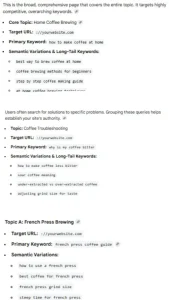
What Is Semantic Keyword Research?
Semantic keyword research is finding keywords based on meaning and topic relationships rather than exact word matches.
Old keyword research focused on phrases like
- “best running shoes”
- “buy running shoes online”
- “running shoes for men”
Semantic keyword research goes deeper. It finds related concepts like the following:
- Running shoe brands (Nike, Adidas, Asics)
- Running shoe features (cushioning, support, weight)
- Use cases (marathon running, trail running, beginners)
- Related problems (foot pain, blisters, shoe fitting)
- Connected topics (running form, stretching, training plans)
When you cover all these related concepts in your content, Google understands you genuinely know the topic. This is how modern search engines evaluate topical authority.
Why Semantic Keyword Research Matters in 2026
Google’s algorithm has changed significantly over the past decade. Three major updates pushed semantic SEO to the forefront:
1. Google Hummingbird (2013)
Hummingbird was Google’s first major step toward understanding search intent rather than just keywords. It looked at the entire query meaning, not individual words.
2. RankBrain (2015)
RankBrain introduced machine learning to search. It started understanding relationships between concepts and what queries meant even if they used different words.
3. BERT (2019) and MUM (2021)
BERT and MUM took semantic understanding even further. These updates help Google understand context, nuance, and relationships between topics—basically, how humans understand language.
In 2026, Google’s algorithms can:
- Understand multiple meanings of the same word
- Connect related concepts across topics
- Recognize topical authority on a subject
- Match content to user intent beyond exact keywords
This is why semantic keyword research is now essential. Single keyword targeting doesn’t work like it used to.
The Difference: Traditional vs Semantic Keyword Research
Here’s a clear comparison between old and new approaches:
Aspect |
Traditional Approach |
Semantic Approach |
| Focus | Exact-match phrases | Topic + related concepts |
| Keyword count | 1 primary, few variations | Main keyword + 20-50 related terms |
| Content depth | Single keyword focus | Comprehensive topic coverage |
| Content length | Often shorter | Typically longer (1,500+ words) |
| Goal | Rank for specific phrase | Build topical authority |
| Internal linking | Random or none | Topic clusters |
| Backlinks needed | Often more | Topical relevance matters more |
The semantic approach takes more work upfront but produces content that ranks for hundreds of related keywords instead of just one.
How to Do Semantic Keyword Research: 5 Practical Methods
Here are practical methods I use for semantic keyword research:
Method 1: Google Autocomplete and People Also Ask
Free, simple, and effective. Start typing your main keyword in the Google search bar and note the autocomplete suggestions.
Process:
- Open Google in incognito mode
- Search your main keyword
- Scroll to “People Also Ask” section
- Note all related questions
- Click on questions to expand more questions
[INSERT SCREENSHOT 2: People Also Ask box for a sample keyword] Alt text: Google People Also Ask box for semantic keyword research
What you get:
- Real questions people ask about your topic
- Related searches Google considers connected
- Topics worth covering in your content
Method 2: Google Related Searches
At the bottom of every Google search result page, you’ll find a “Related searches” section.
Process:
- Search your main keyword
- Scroll to bottom of page
- Note all related searches (usually 8-10 keywords)
- Search those keywords to find more related searches
This creates a chain of related concepts that Google itself thinks are connected to your topic.
Method 3: Topic Clustering Tools
Several tools help identify semantic keywords:
- AnswerThePublic (free version available) — Shows questions and prepositions
- AlsoAsked (free version) — Visualizes People Also Ask relationships
- Keyword Sheeter (free) — Generates hundreds of keyword variations
- Ahrefs Keyword Explorer (paid) — Shows “Parent Topic” feature
- SEMrush Topic Research (paid) — Topic ideas with subtopics
For beginners, the free tools are enough to get started.
Method 4: Competitor Analysis for Semantic Coverage
Look at what top-ranking competitors cover beyond the main keyword.
Process:
- Search your target keyword in Google
- Open the top 3-5 ranking pages
- Note their
- H2 and H3 headings
- Subtopics covered
- Related terms used
- Questions answered
If 3+ top-ranking competitors cover a subtopic, Google likely considers it semantically important. You should cover it too.
Method 5: Wikipedia and Knowledge Graphs
Wikipedia is one of the best resources for finding semantically related concepts.
Process:
- Search your main topic on Wikipedia
- Note headings used in the article
- Look at “See also” section
- Check categories at the bottom of the page
- Click related topic links to find more concepts
Wikipedia structures topics the way Google’s Knowledge Graph does—making it an excellent semantic research resource.
Building Topic Clusters with Semantic Keywords
Once you have your semantic keywords, organize them into topic clusters. This is one of the most effective semantic SEO structures.
What Is a Topic Cluster?
A topic cluster consists of:
- One pillar page — Covers the main topic broadly (e.g., “SEO Guide”)
- Multiple cluster pages—Cover specific subtopics in depth (e.g., “Technical SEO,” “On-Page SEO,” “Link Building”)
- Internal links — Connect all pages together in a hub-and-spoke pattern
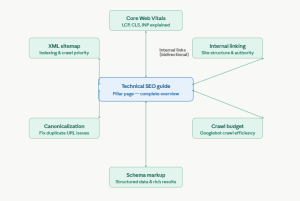
Why Topic Clusters Work
Topic clusters signal topical authority to Google. When you have comprehensive content covering a topic from multiple angles, Google sees you as an authority on that subject.
This approach helps you:
- Rank for the main keyword (pillar page)
- Rank for dozens of long-tail keywords (cluster pages)
- Build clear site structure
- Improve user navigation
- Strengthen internal linking
Example: SEO Topic Cluster
If you run an SEO blog, your topic cluster might look like this:
Pillar Page: “Complete SEO Guide”
Cluster Pages:
- Technical SEO basics
- On-page SEO techniques
- Off-page SEO strategies
- Local SEO for businesses
- E-commerce SEO
- Mobile SEO
- International SEO
Each cluster page links back to the pillar page. The pillar page links to all clusters. This creates a strong topical authority signal.
Common Semantic Keyword Research Mistakes
After 8 years working with SEO, here are mistakes I see repeatedly:
Mistake 1: Keyword Stuffing with Related Terms
Some SEOs misunderstand semantic SEO and start cramming every related keyword into their content. This makes content unreadable, and Google penalizes it.
Better approach: Use related terms naturally where they fit. Quality writing matters more than keyword density.
Mistake 2: Ignoring Search Intent
Finding semantic keywords without checking search intent leads to mismatched content. A related keyword might have completely different intent.
For example, “running shoes” and “marathon training” are semantically related, but they have different intents (transactional vs. informational). Don’t force them onto the same page.
Mistake 3: Creating Thin Cluster Pages
Some people create 20+ thin cluster pages around a pillar. Each cluster page should be substantial and provide real value — not just 500 words around a long-tail keyword.
If you can’t write 1,000+ valuable words on a subtopic, it’s probably not worth a separate page.
Mistake 4: Not Updating Old Content
Once you build topic clusters, they need maintenance. Add new related concepts as the topic evolves. Update statistics, examples, and links.
I recommend reviewing pillar content every 6 months and cluster content every 12 months.
Mistake 5: Ignoring User Experience
Semantic SEO is a strategy, but user experience comes first. If your topic cluster makes navigation confusing, simplify it. Don’t sacrifice usability for SEO structure.
For more on how I approach content quality, see my Editorial Team page.
Tools for Semantic Keyword Research (Free + Paid)
Free Tools
- Google Search — Autocomplete, People Also Ask, Related Searches
- AnswerThePublic — Free tier with limited searches
- AlsoAsked—Free tier showing PAA relationships
- Keyword Sheeter — Generates keyword variations
- Wikipedia — Structured topical research
- Google Trends — Related topics and queries
- Reddit — Real questions in your niche
Paid Tools (When You’re Ready)
- Ahrefs Keywords Explorer — Parent Topic feature, related keywords
- SEMrush — Topic Research tool
- Surfer SEO—Content Editor with semantic suggestions
- Phrase—Topic clustering and content optimization
- MarketMuse — AI-powered topical authority
For most freelancers and small businesses, free tools combined with strategic thinking are sufficient. Paid tools become valuable when you’re managing multiple sites or working at scale.
For my approach to tool comparison, see my detailed Ahrefs vs. SEMrush vs. Moz comparison guide.
FAQs
1. What is semantic keyword research in simple terms?
Semantic keyword research is finding keywords related to your topic by meaning and context, not just exact word matches. For example, instead of just targeting “running shoes,” you also research related concepts like brands, features, use cases, and connected topics like “running form” or “foot care.”
2. How is semantic keyword research different from traditional keyword research?
Traditional keyword research focuses on exact-match phrases and search volume. Semantic keyword research focuses on conceptually related terms, search intent, and topical coverage. The goal shifts from ranking one keyword to building topical authority on an entire subject.
3. Do I need expensive tools for semantic keyword research?
No. Free tools like Google Autocomplete, People Also Ask, Related Searches, AnswerThePublic, and Wikipedia provide enough data for most semantic keyword research. Paid tools speed up the process but aren’t essential, especially for beginners and small sites.
4. What are LSI keywords, and are they the same as semantic keywords?
LSI (Latent Semantic Indexing) keywords were an older concept Google never actually used as a ranking factor. The term is often used interchangeably with “semantic keywords” today, but technically Google uses much more advanced NLP (Natural Language Processing) like BERT and MUM. Focus on semantic understanding, not “LSI keywords” specifically.
5. How many semantic keywords should I include in one article?
There’s no fixed number. Focus on covering the topic comprehensively. Most well-optimized articles naturally include 20-50 related semantic keywords without forcing them in. If you’re counting keywords obsessively, you’re approaching it wrong.
6. What is a topic cluster in semantic SEO?
A topic cluster is a content structure with one main “pillar page” covering a broad topic and multiple “cluster pages” covering specific subtopics in depth. All pages link to each other, signaling topical authority to Google. This structure helps rank for both the main keyword and many related long-tail keywords.
7. Does semantic SEO replace traditional keyword research?
No, it builds on traditional research. You still need to identify your main keyword and understand search volume. Semantic research adds depth by finding related concepts to cover. The best approach combines both—find your main keyword traditionally, then expand semantically.
8. How long should semantic SEO content be?
There’s no fixed word count, but semantic content tends to be longer because it covers topics comprehensively. Most successful semantic content ranges from 1,500 to 4,000 words. The key is covering the topic thoroughly, not hitting a specific word count.
9. Can I use semantic keyword research for local SEO?
Yes. Local semantic SEO involves finding location-related concepts beyond just “[service] in [city].” Research related neighborhoods, local landmarks, service variations, and customer questions specific to your local market. Wikipedia city pages and Google’s local SERP features are good research sources.
10. How does Google’s BERT update affect semantic keyword research?
BERT helps Google understand context and nuance in language. It means search engines now better understand the meaning behind queries, not just keywords. For semantic keyword research, this means focusing on natural language and complete topical coverage matters more than ever. Stuffing keywords or using awkward phrasing actually hurts rankings under BERT.
Final Thoughts on Semantic Keyword Research
Semantic keyword research isn’t a passing trend — it’s how SEO works in 2026 and beyond. As Google’s algorithms become smarter, single-keyword optimization becomes less effective.
The shift requires changing your mindset:
- From “What keyword can I rank for?” to “What topic can I become an authority on?”
- From “Cram keywords into content” to “Cover topics comprehensively”
- From “Single-page optimization” to “Topic cluster strategies”
- From “Volume-focused targeting” to “Intent-focused content”
For practical implementation:
- Pick a main topic relevant to your audience
- Research semantic keywords using free tools (Google PAA, Related Searches)
- Build topic clusters with pillar + cluster pages
- Cover related concepts naturally in content
- Internal link strategically between related pages
- Update and expand clusters over time
All information in this article has been verified against current SEO practices and Google’s documentation. For more on how I verify information, see my Fact-Checking Policy.
If you have specific questions about implementing semantic SEO for your site, feel free to reach out via my Contact page. I respond to legitimate questions within 48 hours. If you spot any factual errors in this guide, please let me know—I aim to verify and correct errors promptly, as detailed in my Correction Policy.
For more SEO guides, browse the rest of Search Engine Realm.
Last Updated: May 20, 2026