

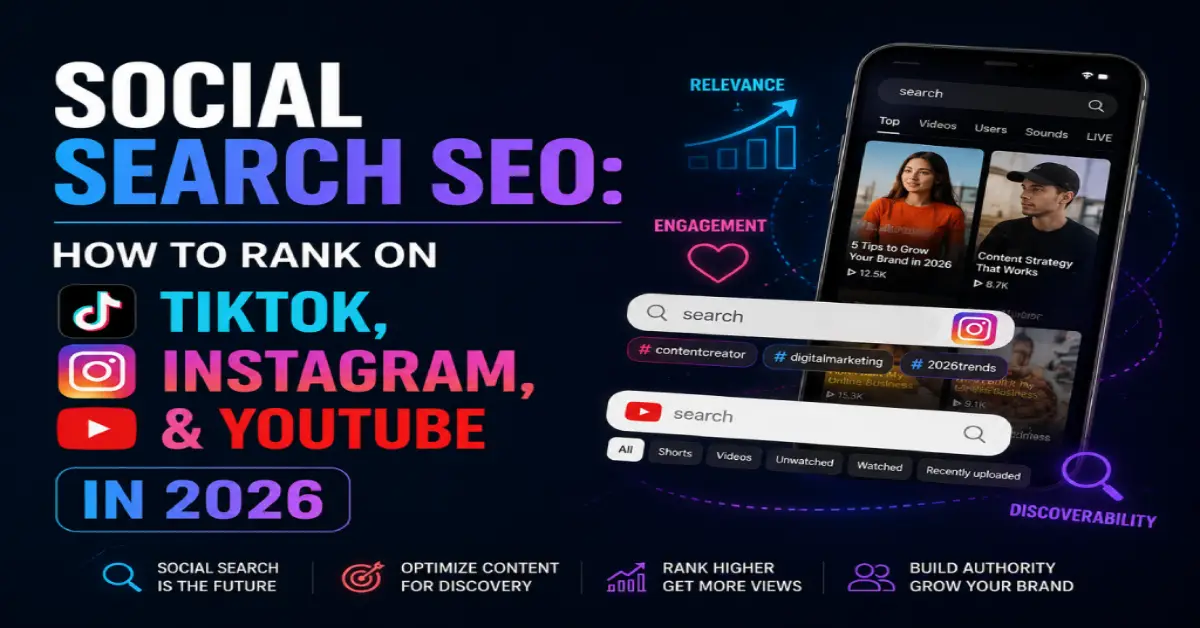
Social search SEO is changing how people discover content online—and if you’ve searched for a coffee shop on Instagram, looked up a workout routine on TikTok, or found a recipe through Pinterest, you’ve already experienced it firsthand.
Social Search SEO is the practice of optimizing your content so it appears in search results inside social media platforms. It’s no longer a niche tactic. In 2026, TikTok, Instagram, YouTube Shorts, and Pinterest function as full search engines — each with its own ranking algorithms, keyword systems, and discovery mechanics.
I’m Zohanuddin Shaikh, an SEO consultant based in Karachi, Pakistan. Over the past 8 years, I’ve worked across traditional SEO and watched search behavior shift dramatically toward social platforms. This guide covers what social search SEO actually is, how each major platform works, and what you can do right now to show up in social search results.
What Is Social Search SEO?
“Social Search SEO” means optimizing your content—videos, captions, images, and audio—so it ranks in the internal search results of social platforms like TikTok, Instagram, YouTube Shorts, and Pinterest.
It’s different from traditional SEO in one important way: you’re not trying to rank on Google. You’re trying to rank inside the platform itself.
When someone opens TikTok and types “strength training for beginners,” TikTok’s algorithm decides which videos to show. When someone searches “coffee shops in Karachi” on Instagram, Instagram decides which posts and accounts appear. These decisions are based on platform-specific ranking signals — not Google’s algorithm.
The core components of social search SEO are the following:
- Keywords in captions and descriptions
- Spoken words in video content (platforms transcribe audio automatically)
- On-screen text overlays
- Hashtags (less important than before, but still relevant)
- Engagement signals—saves, shares, comments, watch time
- Account-level topical authority (how consistently you cover a niche)
Why Social Search SEO Matters in 2026
Here’s a real shift in search behavior worth paying attention to:
A significant portion of users — particularly those under 35 — now start product research, local business searches, and how-to queries directly inside social apps rather than on Google. Google itself acknowledged this publicly, noting that younger users increasingly turn to TikTok and Instagram for discovery.
TikTok and Instagram have both confirmed that improving in-app search is a development priority. This isn’t a temporary trend — it’s a structural change in how people find information.
Searches that now commonly happen inside social platforms:
- “Best restaurants in [city]” — Instagram and TikTok
- “How to fix a leaking tap” — YouTube Shorts and TikTok
- “Affordable wedding venues” — Pinterest and Instagram
- “Beginner gym routine” — TikTok and YouTube Shorts
- “SEO tips for small businesses” — LinkedIn and YouTube
If your content isn’t optimized for social search, you’re invisible to these searches—regardless of how well your website ranks on Google.
How Social Platforms Rank Content in Search
Each platform uses its own algorithm, but they share four common ranking factors:
1. Keyword Relevance
Platforms scan your content for keyword signals across multiple locations:
- Caption text
- Video descriptions
- Profile bio
- On-screen text overlays
- Spoken words (auto-transcribed by the platform)
- Hashtags
TikTok is particularly aggressive at transcribing spoken content. If you say the keyword “budget travel Europe” clearly in your video, TikTok indexes it — even if you never type it in your caption.
2. Engagement Signals
Search ranking inside platforms is heavily influenced by how users interact with your content:
Signal |
Why It Matters |
|
Watch time |
High completion rate = strong relevance signal |
|
Saves |
Indicates the content is worth keeping |
| Shares |
Platform treats shares as strong endorsement |
| Comments |
Shows discussion and engagement |
| Profile clicks |
Signals interest in the creator |
Content with strong engagement signals ranks higher in search results because platforms interpret engagement as evidence that users found the content helpful.
3. Topical Authority
Accounts that consistently publish within one niche build topical authority on that platform. A fitness account that posts strength training content every week will rank more easily for “beginner squat form” than a general lifestyle account that occasionally posts fitness content.
This is the same principle as topical authority in traditional SEO, applied to social platforms.
4. Behavioral Feedback Loops
Platforms adapt based on what users actually do after a search. If users searching “budget travel tips” consistently save itinerary-style videos and skip vlog-style content, the algorithm adjusts. Over time, it prioritizes content formats that users have shown they prefer for that specific query.
Platform-by-Platform Breakdown
TikTok Search
TikTok has developed the most sophisticated in-app search system among social platforms.
How TikTok indexes content:
- Spoken keywords (via automatic speech recognition)
- On-screen text and subtitles
- Caption text
- Hashtags
- Engagement patterns
One unique feature: TikTok shows search query suggestions directly above videos when the content is highly relevant to a search phrase. This is a strong ranking signal worth targeting.
What works on TikTok search in 2026:
- State your keyword clearly in the first 3-5 seconds of the video
- Include the keyword in on-screen text
- Write a descriptive first-line caption (not just emojis)
- Use 3-5 relevant hashtags (not 20+)
- Publish consistently within one niche
What doesn’t work:
- Clickbait captions that don’t match video content
- Artificially encouraging comment engagement (“comment X to get Y”)
- Vague captions with no keyword signals
- Constantly switching content topics
H3: Instagram Search
Instagram’s search has evolved significantly. Caption keywords now carry more weight than they did previously — Instagram executives have confirmed this publicly.
How Instagram ranks search results:
- Caption keywords (now the primary signal)
- Profile relevance to the query
- Recency of engagement
- Content type match (Reels rank differently than static posts)
What works on Instagram search:
- Write your primary keyword in the first line of your caption
- Use natural language—write captions like you’d explain something to a friend
- Add location tags when relevant (especially for local businesses)
- Keep your profile bio keyword-relevant to your niche
What doesn’t work:
- Keyword stuffing in captions (reads as spam)
- Relying only on hashtags for discovery
- Inconsistent posting across unrelated topics
YouTube Shorts
YouTube Shorts now compete directly with long-form YouTube videos in search results. A well-optimized short can rank for queries that used to only surface full-length videos.
Ranking factors for YouTube Shorts search:
- Title relevance (most important)
- Description keywords
- Watch-through rate (what % of viewers watch to the end)
- Subscriber engagement
Key difference from TikTok: YouTube’s search is more title-dependent. Write your Shorts title the way you’d write a YouTube video title—with the keyword near the front.
Pinterest Search
Pinterest functions almost entirely as a visual search engine. Most Pinterest users arrive with clear purchase or planning intent.
How Pinterest ranks content:
- Pin title keywords
- Pin description
- Board names and descriptions
- Image file names (alt text)
- Engagement (saves and clicks)
Pinterest SEO closely mirrors traditional SEO. Keyword research tools and long-tail phrases work well here. Pinterest also has the longest content lifespan of any social platform—a well-optimized Pin can drive traffic for months or years.
LinkedIn Search
LinkedIn search is primarily people and company search, but content also ranks for professional queries.
For content ranking on LinkedIn:
- Use industry keywords in post text
- Write detailed posts rather than one-liners
- Publish consistently within your professional niche
- Profile optimization matters heavily for search visibility
How to Optimize for Social Search SEO: Step-by-Step
Step 1: Find What People Are Actually Searching
Before creating content, find real search queries on each platform:
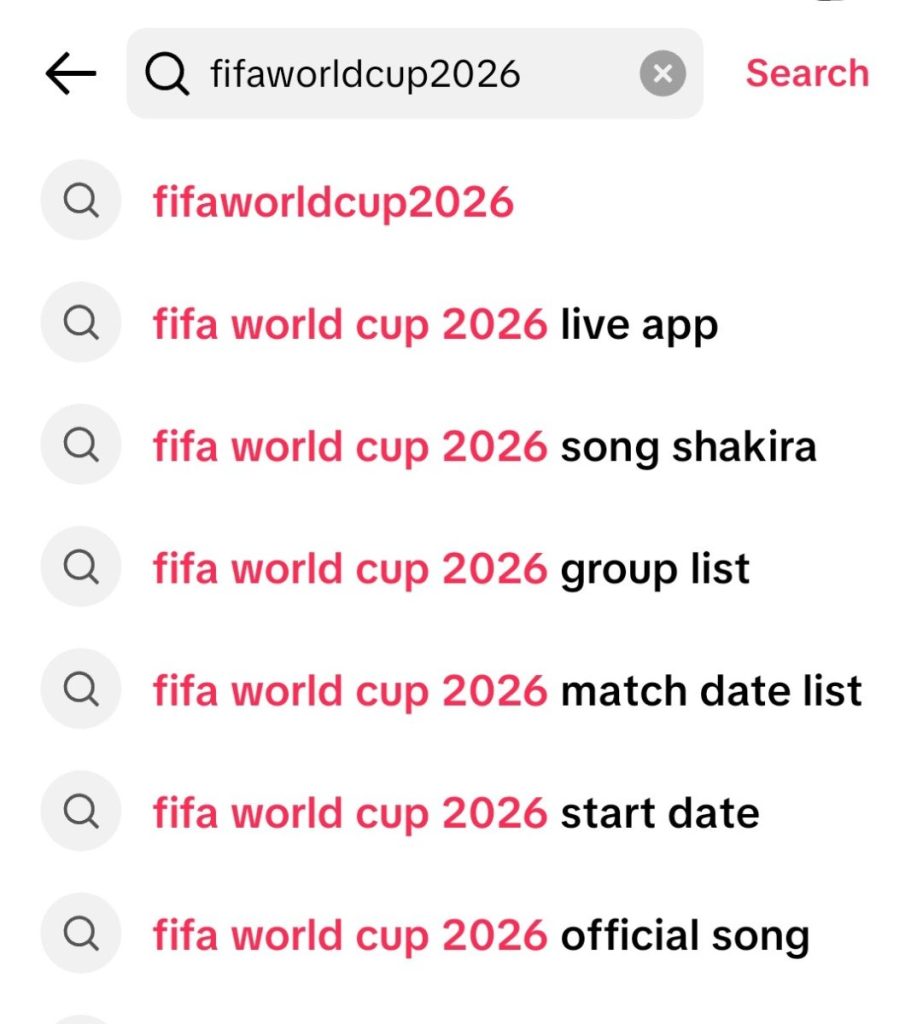
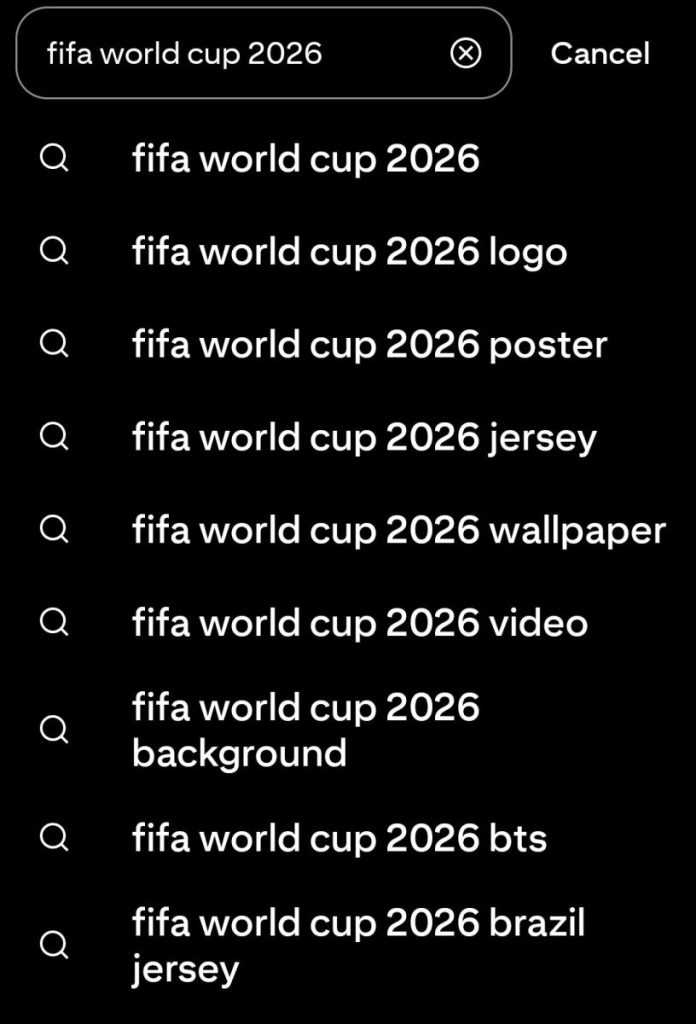
- TikTok: Type a topic in the search bar and note autocomplete suggestions
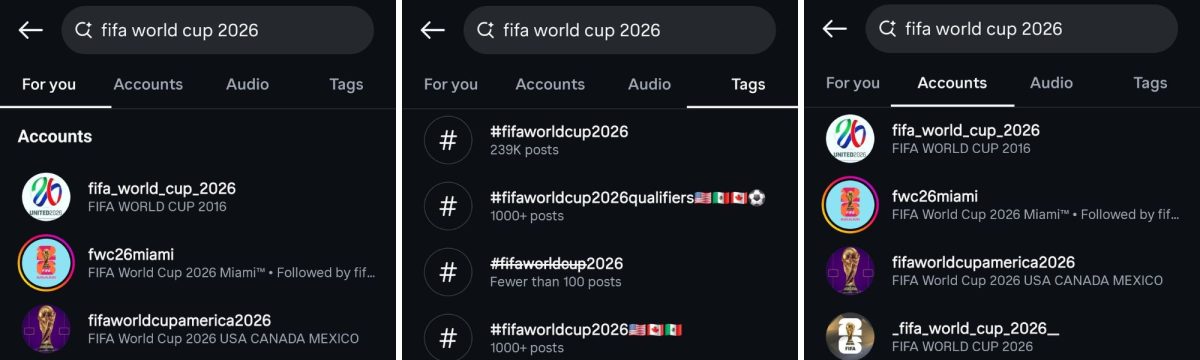
- Instagram: Use Explore search and note suggested topics
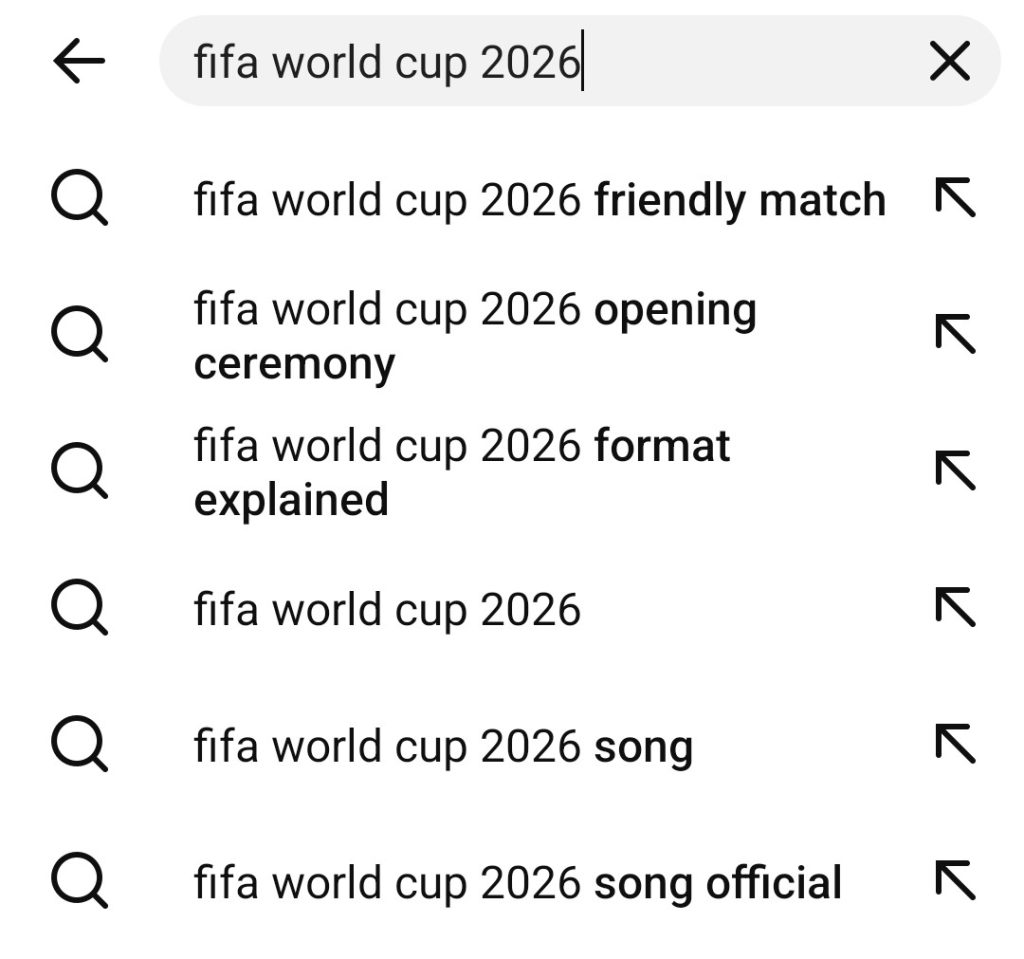
- YouTube: Use YouTube’s search bar autocomplete
- Pinterest: Type a keyword and note the suggested topic tiles
These autocomplete suggestions represent real searches happening on the platform. They’re the equivalent of Google’s “People Also Search “For”—use them.
Also use Google Trends to identify which topics are trending across platforms simultaneously.
Step 2: Place Keywords Strategically
Once you have your target keyword, place it in the following:
- Caption or description — first line, naturally
- On-screen text — visible within the first 3 seconds
- Spoken introduction — say it clearly early in the video
- Profile bio — if it’s relevant to your primary content niche
Avoid keyword stuffing. Natural phrasing performs better than mechanical repetition. Write your caption for a human reader, then verify your keyword is present.
Step 3: Build Topical Consistency
Choose a primary niche and publish consistently within it. Random topic mixing dilutes authority signals on all platforms.
If your account covers SEO, digital marketing, and content strategy—that’s a coherent cluster. If it also covers travel, cooking, and fashion, you’re creating mixed authority signals that make it harder to rank for any specific topic.
Pick a lane. Publish consistently in it.
Step 4: Optimize for Location When Relevant
If you’re targeting a specific location—whether you’re a local business or creating location-specific content—make it explicit:
- Add location tags in posts
- Mention city or region names in captions and spoken content
- Include location-specific phrases naturally (“best SEO consultant in Karachi”)
Location signals improve ranking for local searches on all major platforms.
Step 5: Monitor What’s Working
Social platforms don’t offer the same keyword analytics as Google Search Console, but you can track the following:
- Search impressions (TikTok and YouTube provide this)
- Engagement rate by content type
- Save and share rates (strongest signal)
- Profile visit rate from content
If certain posts consistently outperform others, analyze what’s different — topic, format, caption structure, or keyword placement. Then replicate it.
Common Social Search SEO Mistakes
After working in digital marketing for 8 years, here are the mistakes I see most consistently:
Mistake 1: Treating Hashtags as the Only Strategy
Hashtags still have value, but platforms have significantly reduced their weight as a ranking signal. Relying on 20-30 hashtags instead of writing keyword-rich captions is an outdated approach. Focus on captions first, hashtags second.
Mistake 2: Ignoring Spoken Keywords
Many creators write keyword-optimized captions but speak vaguely in the actual video. TikTok and YouTube both transcribe your spoken content. If you say “check this out” instead of stating your topic clearly, you’re leaving a strong ranking signal unused.
Mistake 3: Inconsistent Niche Coverage
Posting fitness content one week, travel content the next, and finance content after that confuses platform algorithms about what your account is about. Topical consistency is one of the strongest authority signals across all platforms.
Mistake 4: Vague Captions
“New video!” and “Thoughts?” are not captions. They’re missed optimization opportunities. Your caption is searchable text — treat it like a meta description for your video.
Mistake 5: Only Chasing Viral Trends
Trend-based content can generate short-term spikes but rarely builds lasting search visibility. Search-optimized content compounds over time. A well-optimized video about “beginner gym routine” will keep getting discovered through search for months. A trend video has a 48-72 hour window.
Social Search SEO vs Traditional SEO
Factor |
Traditional SEO |
Social Search SEO |
|
Platform |
Google, Bing | TikTok, Instagram, YouTube, Pinterest |
|
Content Format |
Text articles, pages | Video, images, short-form content |
|
Keyword Research |
Search Console, Ahrefs, SEMrush | Platform autocomplete, native analytics |
| Ranking Signals | Backlinks, content quality, technical SEO |
Engagement, watch time, topical authority |
| Content Lifespan | Months to years |
Hours to weeks (except Pinterest) |
| Primary Intent | Information, purchase |
Discovery, inspiration, how-to |
The key takeaway: Social Search SEO doesn’t replace traditional SEO — it complements it. A brand with strong Google rankings and strong platform search visibility captures significantly more discovery opportunities than one relying on a single channel.
Diagnostic Checklist: Before You Publish
Use this checklist before publishing content on any social platform:
- The primary keyword is in the first line of the caption/description.
- Keyword is spoken clearly in the first 5-10 seconds of video
- Keyword appears in on-screen text (if applicable)
- Location tag added (if relevant)
- Profile bio reinforces the content niche
- Caption is written in natural language (not keyword-stuffed)
- Content stays within your defined niche
- 3-5 relevant hashtags included (not 20+)
If more than 3 boxes are unchecked, revisit your optimization before publishing.
FAQs
1. What is Social Search SEO?
Social Search SEO is the process of optimizing content on social media platforms—TikTok, Instagram, YouTube Shorts, Pinterest, and LinkedIn—so it appears in those platforms’ internal search results. It focuses on keywords in captions, spoken content, on-screen text, and engagement signals rather than traditional web ranking factors.
2. Does TikTok use keyword search?
Yes. TikTok indexes keywords from captions, on-screen text, spoken audio (via automatic transcription), and hashtags. Including your target keyword naturally in all four locations gives TikTok multiple signals to index your content for that search query.
3. Are hashtags still important for Instagram search in 2026?
Hashtags still contribute to discovery but are no longer the primary ranking signal on Instagram. Caption keywords and engagement signals now carry more weight. A keyword-optimized caption with 3-5 relevant hashtags outperforms a vague caption with 30 hashtags.
4. How important is location for platform search?
Increasingly important. All major platforms give ranking advantages to location-tagged content for local queries. If you’re a local business or targeting a specific geographic market, adding location tags and mentioning place names in captions and spoken content significantly improves local search visibility.
5. Can Social Search SEO replace traditional SEO?
No. Social Search SEO and traditional SEO serve different discovery channels. Google remains the dominant search engine for most queries. Social platforms are strong for how-to content, local discovery, product research, and visual inspiration. A complete digital presence benefits from optimizing for both.
6. How do I find keywords for social platforms?
The most reliable method is using each platform’s native search bar. Type your topic and note what autocomplete suggestions appear—these represent real searches happening on the platform. TikTok, YouTube, Instagram, and Pinterest all provide autocomplete suggestions. For broader trend analysis, Google Trends helps identify topics gaining momentum across multiple platforms simultaneously.
7. What content format works best for social search?
It depends on the platform. TikTok and YouTube Shorts favor short-form video (15-90 seconds) with clearly spoken keywords. Instagram favors Reels for search discovery over static posts. Pinterest favors vertically oriented images with keyword-optimized titles and descriptions. LinkedIn favors text-heavy posts with industry keywords for professional queries.
8. How long does it take to rank in social search?
Social search ranking can happen faster than traditional SEO. A well-optimized TikTok video can appear in search results within hours of posting. However, building consistent ranking authority in a niche typically takes weeks to months of consistent publishing. Pinterest is the exception—well-optimized Pins can take 2-3 months to gain traction but then drive traffic for years.
Final Thoughts
Social Search SEO represents a genuine shift in how people find content, products, and services. TikTok, Instagram, YouTube Shorts, and Pinterest now function as search engines in their own right — each with keyword systems, ranking algorithms, and user intent signals.
The fundamentals aren’t complicated: use keywords naturally in captions, speak them clearly in videos, build topical consistency in your niche, and create content people actually engage with.
What makes social search SEO different from chasing trends is the compounding effect. Search-optimized content keeps getting discovered. Trend content disappears in 48 hours.
If you’re working on building a digital presence — whether for a brand, a business, or a personal platform — incorporating social search into your content strategy is no longer optional. It’s where a significant portion of your potential audience is already searching.
For questions about applying these strategies to your specific situation, feel free to reach out through my Contact page.
For more SEO guides, browse Search Engine Realm.
Last Updated: May 2026