

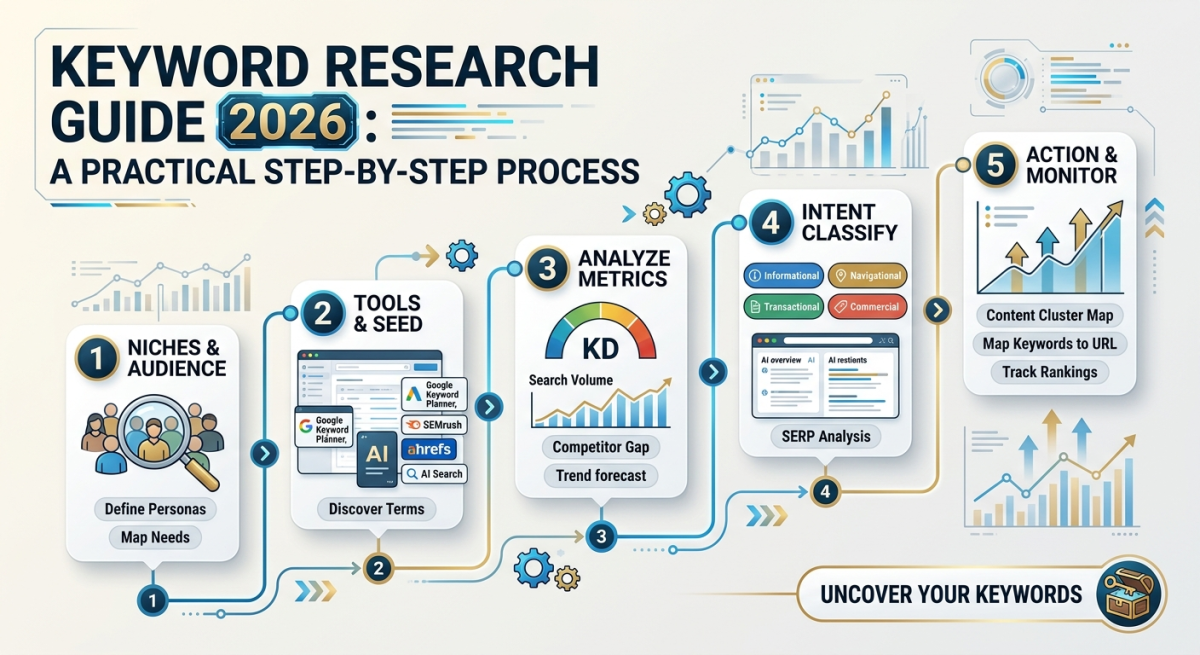
If you want consistent organic traffic in 2026, you need more than a list of keywords — you need a structured system. This keyword research guide is built from real SEO work across SaaS, affiliate, publisher, and e-commerce sites, not theory.
I’m Zohanuddin Shaikh, an SEO consultant based in Karachi, Pakistan, with 8 years of hands-on experience. I’ve used these frameworks during technical audits, content gap analysis, and recovery projects after ranking drops. Keyword research today isn’t about stuffing phrases into articles—it’s about intent mapping, SERP analysis, and building topical authority that survives algorithm updates.
This guide walks you through modern keyword research step by step, with practical insights, trade-offs, and real examples.
What Is Keyword Research?
Keyword research is the process of identifying and analyzing the search terms people use in search engines to discover content opportunities. It involves evaluating search volume, keyword difficulty, search intent, SERP competition, and topical relevance to guide content strategy and improve organic visibility.
In practice, keyword research answers one question: What does the user actually want—and how can we serve it better than what currently ranks?
Modern keyword research includes the following:
- Search intent analysis
- Search volume analysis
- SERP analysis
- Competitor benchmarking
- Content gap analysis
- Internal keyword cannibalization review
It’s no longer just about finding high-volume keywords.
Types of Keywords
Understanding keyword categories helps you map content strategically instead of randomly publishing articles.
Keyword Type |
What It Is |
Examples |
Best Used For |
|
Seed Keywords |
Broad root terms | “SEO tools,” “email marketing” | Generating variations and direction |
|
Long-Tail Keywords |
Specific, lower-volume phrases | “best SEO tools for small businesses“ | Higher conversions, clearer intent |
|
Informational |
Knowledge-seeking queries | “What is keyword difficulty?” |
Top-of-funnel content |
| Commercial | Evaluation queries | “best keyword research tools” |
Mid-funnel, comparison content |
| LSI / Semantic | Related contextual terms | “search volume,” “SERP analysis” |
Reinforcing topical relevance |
| Zero Search Volume | Tools show “0” volume | Emerging or niche terms |
Future-proofing, niche authority |
A note on zero search volume keywords: Some tools show “0” volume, but that doesn’t always mean zero traffic. In competitive SaaS niches, I’ve seen these keywords generate meaningful impressions once indexed — especially when aligned with emerging trends before tools catch up.
Understanding Search Intent
Search intent analysis identifies the reason behind a user’s query. Modern SEO prioritizes matching content to intent categories to improve ranking stability and user satisfaction.
Google evaluates intent before it evaluates content depth. This is one of the most important shifts in modern SEO.
The Four Core Intent Types
Intent Type |
What the User Wants |
Example Query |
Content That Wins |
|
Informational |
To learn something | “What is keyword research?” | Guides, explanations, tutorials |
|
Commercial |
To compare options | “best keyword tools” |
Comparisons, reviews, listicles |
| Transactional | To take action | “Buy an SEMrush subscription.” |
Product pages, pricing, signup |
| Navigational | To reach a destination | “Ahrefs login” |
Brand pages, login pages |
Why Intent Matching Matters
A common pattern I see in audits: a site targets “best budgeting app” with a 3,000-word informational guide. But when you actually check the SERP, the ranking results show comparison tables, star ratings, pricing breakdowns, and pros-and-cons lists.
That’s commercial intent — not informational. The content doesn’t match what Google has decided users want for that query.
In cases like this, restructuring the page around comparison matrices and clear recommendations typically resolves the mismatch, and rankings stabilize over one or two algorithm update cycles. Intent mismatch is one of the most common causes of ranking instability I encounter.
Step-by-Step Keyword Research Process
Here’s the exact workflow I use across client projects.
Step 1: Define Seed Topics
Start with broad seed keywords aligned with business goals. Use these sources:
- Google Search Console (queries you already rank for)
- GA4 (what brings traffic now)
- Google Ads Keyword Planner
- Customer support queries and common questions
Seed keywords guide your overall direction before you go deep.
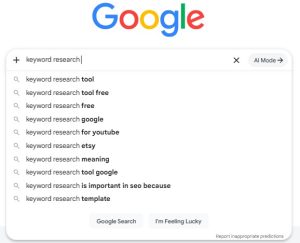
Step 2: Expand With Long-Tail Keywords
Use tools and SERP suggestions to identify:
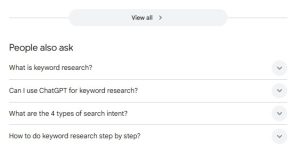
- Question-based queries
- Comparison keywords
- Problem-based keywords
- Zero search volume opportunities
Look for patterns across keywords, not isolated terms.
Step 3: Perform Search Volume Analysis
Search volume helps you prioritize, but trade-offs exist:
- High volume → higher competition
- Low volume → lower competition, often clearer intent
Balance opportunity with feasibility. A realistic low-competition keyword often beats an aspirational high-volume one.
Step 4: Analyze Keyword Difficulty
Keyword difficulty estimates competition based on domain strength and backlinks. But don’t rely on tool metrics blindly — always combine the score with manual SERP analysis. Tools estimate; the actual SERP tells the truth.
Step 5: Conduct SERP Analysis
Look at the actual search results for your target keyword:
- Content format (guides, comparisons, product pages)
- Word count trends across top results
- Authority of ranking domains
- SERP features (FAQs, AI Overviews, videos, featured snippets)
- Internal linking patterns
If the top results are all strong, established brands, consider targeting supporting angles or long-tail variations instead of competing head-on.
Step 6: Run Content Gap Analysis
Compare your site to competitors and ask:
- What topics are they covering that you aren’t?
- Where do they rank that you don’t?
- Are they clustering content better than you?
Content gap analysis often reveals the most scalable growth opportunities.
Step 7: Prevent Keyword Cannibalization
Keyword cannibalization happens when multiple pages target the same query, confusing search engines about which to rank.
Symptoms:
- Ranking volatility
- Fluctuating URLs in search results
- Declining impressions across affected pages
Solutions:
- Merge similar content into one stronger page
- Re-optimize each page for distinct intent
- Clarify internal linking to signal the primary page
Keyword Research Tools Compared
No single tool is perfect. Here’s how the major tools compare and where each fits in the workflow.
Tool |
Data Source |
Best Use Case |
Key Strength |
Main Limitation |
|
Google Search Console |
Real Google data from your site | Queries already driving impressions | 100% accurate query data | Only shows keywords you already rank for |
|
Google Keyword Planner |
Google Ads database | Commercial keyword discovery | Reliable volume ranges, CPC data | Volume grouped without active spend |
| Ahrefs | Third-party index | Competitive research, SERP analysis | Strong difficulty metrics, backlinks |
Estimated, not direct Google data |
| SEMrush | Third-party database | Keyword + market analysis | SERP feature tracking, gap tool |
Some volumes estimated |
| Moz | SEO metrics database | Difficulty and authority evaluation | Trusted authority metrics |
Smaller keyword database |
| Ubersuggest | Aggregated SEO data | Quick expansion, content ideas | Easy interface, long-tail ideas |
Less accurate difficulty scores |
How I use tools in practice:
- Google Search Console for real query data, impression trends, and click-through analysis
- Google Keyword Planner for commercial search estimates and paid search alignment
- Third-party tools (Ahrefs, SEMrush, Moz) for keyword difficulty, competitive SERP analysis, and backlink comparison
The key principle: always cross-validate data across at least two sources. No single tool gives the complete picture.
For a deeper comparison of the three major paid tools, see my Ahrefs vs SEMrush vs Moz comparison guide.
Keyword Clustering Strategy
Keyword clustering groups related keywords into thematic clusters based on search intent and semantic similarity. Instead of targeting one keyword per page, clusters help build topical authority and improve internal linking structure.
Wrong Approach vs Right Approach
Isolated Posts (Weak) |
Cluster Strategy (Strong) |
|
“What is keyword research?” |
Pillar page: Complete keyword research guide |
|
“Keyword research process” |
↳ Supporting article: The research process |
| “Keyword research tools” |
↳ Supporting article: Tools comparison |
| “Keyword clustering strategy” |
↳ Supporting article: Clustering methods |
| No internal connection |
All linked back to the pillar page |
The clustered structure signals topical authority to search engines and keeps users engaged across related content. This is how modern sites build authority that survives algorithm updates.
Common Keyword Research Mistakes
Mistake |
Why It Hurts |
The Fix |
|
Ignoring search intent |
Content doesn’t match what users want | Always analyze the live SERP first |
|
Chasing only high-volume terms |
High competition, low conversion | Balance with long-tail opportunities |
|
Trusting difficulty scores blindly |
Tool estimates aren’t reality | Combine with manual SERP review |
| Overlooking SERP layout | Wrong content format |
Match the dominant format ranking |
| Creating duplicate intent pages | Keyword cannibalization |
Merge or differentiate intent |
| Ignoring zero-volume keywords | Missing emerging opportunities |
Target trends before tools catch up |
| Skipping content gap analysis | Missing scalable growth |
Compare against competitors regularly |
In my experience, intent mismatch causes far more ranking losses than weak backlinks. Getting intent right is the highest-leverage part of keyword research.
Diagnostic Checklist Before Publishing
Before publishing any keyword-targeted content, confirm:
- Content matches the dominant SERP intent for the target keyword
- Keyword cannibalization is avoided (no competing pages)
- Semantic and related keywords are included naturally
- Internal linking to and from related pages is clear
- Relevant entities and subtopics are covered
- Content structure supports featured snippet and AI Overview extraction
- The page targets one primary intent, not several
Publishing without this check significantly increases ranking volatility risk.
FAQs
1. How do I do keyword research step by step?
Start with seed keywords aligned with your goals, expand into long-tail variations, conduct search volume analysis, evaluate keyword difficulty, perform manual SERP analysis, run content gap analysis, cluster related keywords, and align each page with a clear search intent. The process matters more than any single tool.
2. How should beginners approach keyword research in 2026?
Beginners should focus on understanding search intent first, target long-tail keywords with clearer intent, analyze SERPs manually before trusting tool scores, and build topical clusters rather than chasing high-volume head terms. Starting narrow and specific produces faster results than competing broadly.
3. How do I do keyword research for blog posts?
For blog posts, identify informational keywords aligned with real user problems, validate the intent through SERP analysis (confirm the results are actually articles, not product pages), and include related semantic variations to strengthen topical coverage. One clear intent per post performs best.
4. What’s the best keyword research approach for niche websites?
For niche sites, target low-competition long-tail keywords, leverage zero search volume opportunities aligned with emerging trends, build tight topical clusters around your core themes, and carefully avoid keyword cannibalization across similar articles. Depth in a narrow niche beats breadth.
5. How do I find low-competition keywords?
Look for long-tail queries with clear intent, analyze whether weaker domains are ranking in the SERP (a sign of beatable competition), assess keyword difficulty scores cautiously, and identify content gaps competitors haven’t fully covered. The SERP itself reveals competition better than any score.
6. How does keyword research differ for affiliate marketing?
For affiliate content, focus on commercial and comparison keywords, analyze product-focused SERPs to confirm buyer intent, evaluate the authority strength of currently ranking domains, and add genuine evaluation depth (real comparisons, honest pros and cons) to differentiate from thin affiliate content.
7. How should new websites approach keyword research?
New websites should start with narrow topical clusters, prioritize low-to-moderate competition terms, build internal linking early to establish structure, and avoid broad head keywords initially. New domains lack the authority to compete for competitive terms, so specificity is the advantage.
8. How do I analyze keyword difficulty accurately?
Review tool-based difficulty scores as a starting point, then analyze the backlink profiles of pages actually ranking, assess their content quality honestly, and evaluate the domain authority strength of the top results. The combination of tool data and manual review gives a realistic picture.
9. What is search-intent-based keyword research?
It’s the practice of categorizing keywords into informational, commercial, transactional, and navigational intent, then structuring content around that intent rather than search volume alone. Matching intent is the single biggest factor in ranking stability.
10. What is a keyword clustering strategy?
Keyword clustering groups related keywords under pillar pages and supporting articles, using internal linking to signal topical relationships. Instead of one thin page per keyword, you build comprehensive topic coverage that demonstrates authority to search engines.
Final Thoughts
This keyword research guide isn’t about chasing trends — it’s about building a durable SEO foundation.
Modern keyword research requires intent clarity, real SERP analysis, strategic clustering, technical awareness, and ongoing performance monitoring. SEO in 2026 rewards structure, depth, and authority — not shortcuts.
When you combine search intent analysis, content gap analysis, semantic relevance, and strong internal linking, you create a system that withstands algorithm updates and supports long-term growth.
Keyword research isn’t just the first step — it’s the blueprint for everything that follows.
For questions about applying these frameworks to your own site, feel free to reach out through my Contact page.
For more SEO guides, browse Search Engine Realm.
Last Updated: June 2026