

Creating a strong internet presence might be difficult. You optimize your site and write amazing content, yet organic growth is slow. Piece missing? A strong backlink profile. Web 2.0 backlinks are still valuable when used properly, despite numerous improved link-building methods. This method lets you construct a foundation of relevant connections and manage their content and context.
This detailed explanation will explain Web 2.0 backlinks. We will explain these relationships, why they matter, and how to develop them for long-term, scalable growth. You will learn how to construct high-quality Web 2.0 sites that pass authority and boost your brand’s digital presence. Avoid spamming methods. We prioritize a current, value-driven strategy that search engines like.
Understanding Web 2.0 and Its Role in SEO
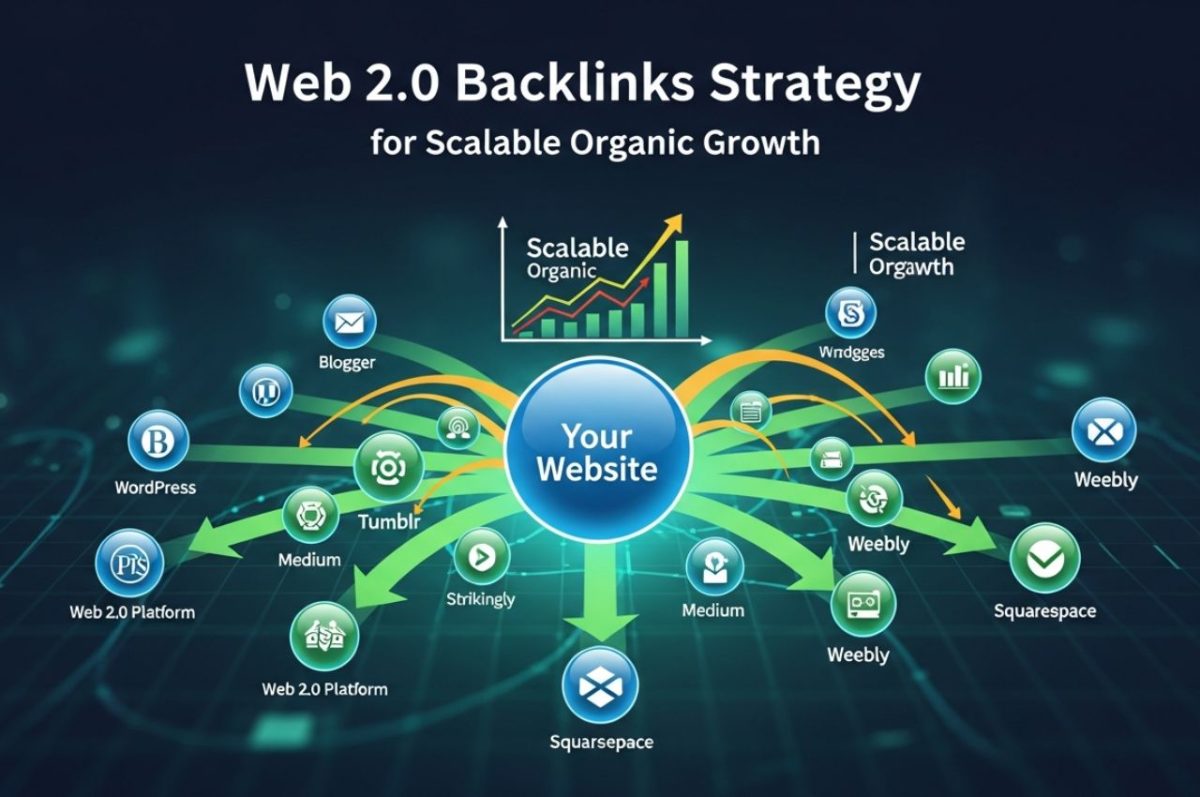
Before discussing the plan, we must define “Web 2.0”. User-generated content and social involvement define the second generation of the internet. Consider WordPress.com, Blogger, Tumblr, Weebly, and Medium. Anyone may develop and publish blog articles, webpages, and more on these platforms.
Web 2.0 backlinks are links from user-generated content platforms to your main website (your “money site”) for SEO. With high domain authority (DA) and search engine trust, these sites may connect to your site and boost its authority. A successful Web 2.0 backlinks strategy relies on creating a network of valuable and contextually relevant mini-sites on these platforms.
Why a Web 2.0 Backlinks Strategy Still Works in 2025
You may have heard that Web 2.0 link building is “black hat” SEO. While search engines punish spammy implementations of this method, a well-implemented, value-first approach is very beneficial. The reason:
- Control: You have full control over content, anchor text, and link placement. Link-building strategies like guest blogging and outreach seldom provide this level of control.
- Economical: Most Web 2.0 platforms are free. This makes it a cheap approach to develop backlinks for new or small enterprises.
- Relevancy: Web 2.0 material might be particularly tailored to the page you link to on your main site. This contextual relevance sends strong signals to search engines.
- Authority Building: These platforms are authoritative. Use their potential to improve your site by generating valuable material on them.
- Diversification: Healthy backlink profiles are varied. Web 2.0 links make your profile seem more natural to search engines.
Web 2.0 sites should be seen as genuine, if smaller, assets that provide value to readers, not link farms.
The Foundation: Finding the Right Web 2.0 Platforms
Any good Web 2.0 backlinks strategy starts with platform selection. Not all Web 2.0 sites are alike. You should target credible, high-domain-authority, and Google-indexed sites.
Start with these popular and successful Web 2.0 platforms:
- Use WordPress,
- Blogger,
- Tumblr,
- Weebly.
- Web sites: Google,
- Wix,
- Medium, and Jimdo.
Source: Strikingly.com and LiveJournal.com
Look for “do-follow” and “no-follow” links while assessing platforms. Although “do-follow” connections are more SEO-friendly, genuine link profiles include both. Above all, select systems that are simple and offer enough content personalization.
Step-by-Step Guide to Creating a High-Quality Web 2.0 Property
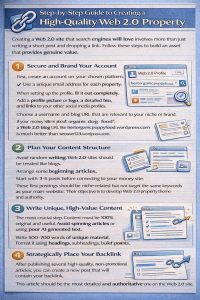
Creating a Web 2.0 site that search engines will love involves more than just writing a short post and dropping a link. Follow these steps to build an asset that provides genuine value.
Step 1: Secure and Brand Your Account
First, create an account on your chosen platform. Use a unique email address for each property to avoid creating an obvious footprint. When setting up the profile, fill it out completely. Add a profile picture or logo, a detailed bio, and links to your other social media profiles. Choose a username and blog URL that are relevant to your niche or brand. For instance, if your money site is about “organic dog food,” a Web 2.0 blog URL like bestorganicpuppyfood.wordpress.com is much better than seouser123.wordpress.com.
Step 2: Plan Your Content Structure
Avoid random writing. Web 2.0 sites should be treated like blogs. Arrange some beginning articles. Start with 3-5 posts before connecting to your money site. These first postings should be niche-related but not target the same keywords as your main website. Their objective is to develop Web 2.0 property theme and authority.
Suppose your money site’s pillar page is “Best Dog Training Techniques,” your first Web 2.0 postings may be:
“5 Common Mistakes New Puppy Owners Make”
“Choosing the Right Leash for Your Dog”
“The Benefits of Crate Training”
Step 3: Write Unique, High-Value Content
The most crucial step. Content must be 100% original and useful. Avoid spinning articles or using poor AI-generated text. Write 500–700 words of unique material. Format it using headings, subheadings, bullet points, and short paragraphs for readability.
Add relevant graphics and videos (embed YouTube videos) to engage readers. Write a post people want to read. Google will likely dismiss sparse, unhelpful, or badly written material, making your link useless.
Step 4: Strategically Place Your Backlink
After publishing several high-quality, non-promotional articles, you can create a new post that will contain your backlink. This article should be the most detailed and authoritative one on the Web 2.0 site.
- Context is King: The link should be placed naturally within the content. It should make sense for a reader to click on it to learn more. For example, in an article about “Advanced Dog Training Commands,” you could write: “For a complete breakdown of positive reinforcement methods, you can check out this comprehensive guide on dog training techniques.” The hyperlinked text would then point to your pillar page.
- Anchor Text Strategy: Your anchor text (the clickable text) should be varied and natural. Avoid over-optimizing with exact match keywords. Use a mix of:
-
- Branded Anchors: “Your Brand Name”
- Naked URLs: “www.yourwebsite.com/page“
- Generic Anchors: “click here,” “learn more”
- Long-Tail/Partial Match Anchors: “a guide to dog training methods”
- Exact Match Anchors (Use Sparingly): “dog training techniques”
A good rule is to use exact match anchors less than 5% of the time.
Tiered Link Building: Powering Up Your Web 2.0 Strategy
A standard Web 2.0 backlinks strategy is effective, but you can amplify its power significantly with tiered link building. This advanced technique involves building links to your Web 2.0 properties, which then pass that enhanced authority on to your main website.
Here’s how it works:
- Tier 1: This is your network of high-quality Web 2.0 sites. These sites link directly to your money site. As we’ve discussed, these must contain unique, valuable content.
- Tier 2: This is a larger set of properties that link to your Tier 1 sites. The quality requirements for Tier 2 can be slightly lower, but they should still be decent. The purpose of Tier 2 is to send “link juice” to your Tier 1 properties, making them more authoritative. You might use other Web 2.0s, blog comments, forum profiles, or social bookmarks for this tier.
- Tier 3 (Optional): This tier involves building a large volume of lower-quality links to your Tier 2 properties. These can be created with automated tools, as the risk to your money site is extremely low (three tiers removed). This tier acts as a signal booster for your entire link pyramid.
The beauty of this structure is that it insulates your main website. Any potential penalties from lower-quality links in Tier 2 or 3 would affect the intermediary properties, not your money site. Meanwhile, the authority flows upwards, strengthening your Tier 1 links and ultimately benefiting your primary domain.
Avoiding Common Pitfalls and Penalties
Executing a Web 2.0 strategy incorrectly can do more harm than good. Here are the most common mistakes to avoid:
- Using Spun or Duplicate Content: This is the fastest way to get your Web 2.0 sites de-indexed. Always use 100% original content.
- Creating a Detectable Footprint: Don’t use the same username, password, or email across all your properties. Don’t use the same theme or link out to your money site from the very first post on every blog. Mix things up to look natural.
- Linking Out Immediately: A brand new blog that links out to a commercial site in its first post looks suspicious. Build some content and let the site “age” for a few days or weeks before adding your money site link.
- Over-Optimizing Anchor Text: Using your main keyword as the anchor text for every link is a huge red flag for search engines. Diversify your anchor text profile.
- Forgetting to Build Authority: A Web 2.0 site with zero external links pointing to it has very little authority to pass on. Link to your Tier 1 properties from other relevant sources (your social media, other blogs, etc.) to give them a boost.
The Secret to Scalability: Systematization and Outsourcing
Building one or two Web 2.0 properties is easy. Building dozens or hundreds to support a large website requires a system. Here’s how you can scale your Web 2.0 backlinks strategy:
- Create a Master Spreadsheet: Track everything. Your spreadsheet should include the Web 2.0 platform, URL, username, password, email used, date created, and the status of its content and links.
- Develop Content Templates: While all content must be unique, you can create templates or outlines for different types of articles. This speeds up the writing process without sacrificing quality.
- Batch Your Tasks: Dedicate specific blocks of time to each part of the process. For example, spend one afternoon creating accounts, another day writing content for five sites, and another day scheduling posts.
- Consider Outsourcing: Once your system is refined, you can outsource parts of it. You can hire freelance writers to create the content or virtual assistants (VAs) to set up the accounts and publish the posts. Provide them with clear instructions and your master spreadsheet to ensure consistency.
By systematizing the process, you turn a time-consuming task into a predictable and scalable link-building machine.
How to Get Your Web 2.0 Backlinks Indexed
A backlink is worthless if Google doesn’t know it exists. While high-quality Web 2.0 sites on popular platforms usually get indexed on their own, you can take steps to speed up the process.
- Submit to Indexers: There are paid services (often called “link indexers”) that will automatically create signals to get Google’s crawlers to visit your new pages. They work by pinging the URL and creating a variety of quick, low-quality links to it. Use these only on your Tier 1 and Tier 2 properties, never directly on your money site.
- Social Sharing: Share your new Web 2.0 posts on your social media profiles like Twitter, Facebook, and Pinterest. This creates social signals and can drive both crawlers and real traffic.
- Link from Other Indexed Properties: Once a new Web 2.0 site is created, add a link to it from one of your older, already-indexed Web 2.0 properties. This “daisy chain” helps Google’s spiders discover your new content.
- Use a Pinging Service: Pinging services notify search engines and blog directories that your site has been updated. While less effective than they used to be, free services like Ping-o-Matic can still be a helpful, low-effort step.
FAQs
1. What are Web 2.0 backlinks?
Your WordPress.com, Blogger, or Tumblr links. Quality content and natural links may increase SEO on these high-authority sites.
2. What is Web 2.0 strategy?
Creating Web 2.0 mini-sites, adding great material, and linking to your main site contextually. Used to develop authority using tiered links.
3. Indexing Web 2.0 backlinks?
To speed up Google crawling, employ original material, social media connections, indexing technologies, and interlink Web 2.0 postings.
4. What’s a backlink strategy?
A strategy to gain authority and rankings using guest articles, link bait, broken link construction, and Web 2.0 foundations.
5. Are black-hat Web 2.0 backlinks?
Black hat refers to low-quality, automated Web 2.0s. Manually constructed Web 2.0s with genuine content are gray hat or white hat when done well.
Conclusion
Current Web 2.0 backlinks don’t trick search engines. A network of excellent, relevant content assists your principal website and generates a more diverse backlink profile. This strategy meets Google’s authority, relevance, and user experience standards when done correctly.
Web 2.0 sites are mini-brand assets that increase your expertise, topic footprint, and search engine trust, not just blogs. You may produce content, alter anchor text, and determine when and how to link to your site using these services.
Web 2.0 backlinks are a foundation, not a strategy. They benefit from guest blogging, digital PR, and content marketing. The right tiered link creation technique may enhance authority without compromising your money site.
Value quality above quantity to succeed. Develop valuable content, meticulously construct your properties, and give them authority via social signals and secondary connections. Document and organize your procedures, then expand when ready.
Value-driven Web 2.0 offers unique control, scalability, and effect despite more advanced SEO algorithms. It can drive long-term organic development if done well. Start building immediately to boost your online visibility.