

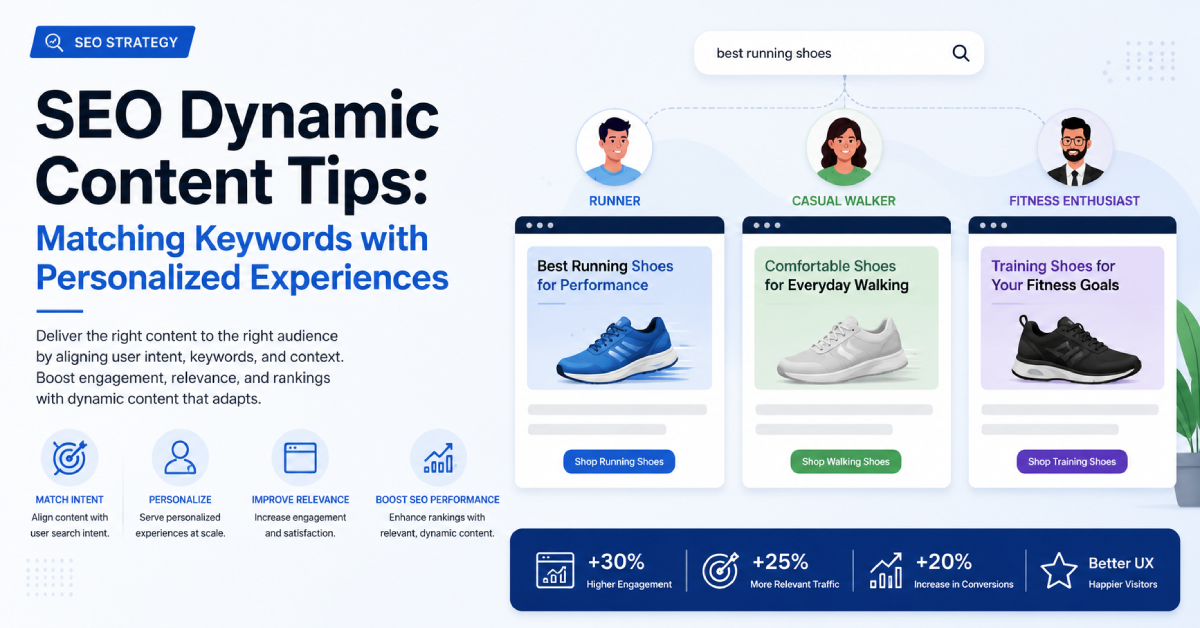
Dynamic content SEO has shifted from being a user experience feature to a genuine technical SEO factor. Dynamic content now influences how search engines understand pages, evaluate relevance, and maintain index stability.
Many websites introduce dynamic content for personalization, engagement, or conversion improvements. The SEO impact often becomes visible only later — rankings fluctuate, indexing becomes inconsistent, and Google Search Console shows unstable behavior.
I’m Zohanuddin Shaikh, an SEO consultant based in Karachi, Pakistan, with 8 years of experience. In my work, I’ve found that the issue is rarely personalization itself. The real problem lies in how dynamic content interacts with search intent, crawl behavior, and consistency signals. Search engines need stable signals to understand what a page is about, which queries it should rank for, and how it compares to competing pages. When uncontrolled changes reduce that clarity, relevance weakens—even when user engagement appears strong. This guide explains how dynamic content affects SEO and how to use it safely.
What Dynamic Content Means in SEO
Dynamic content is any content that changes based on conditions — user location, behavior, device, login status, or other signals — rather than staying fixed for every visitor.
Dynamic content includes several types, and each affects SEO differently. Understanding these categories is the first step to using dynamic content safely.
Type |
What It Is |
SEO Impact |
|
Crawl-visible |
Server-rendered, visible to bots | Directly affects rankings |
| User-only | Appears after page load |
Influences engagement, not rankings |
| Hybrid | Mixes server and client-side changes |
High risk — indexing instability |
The distinction matters enormously. Search engines treat each type differently, and mixing them carelessly is where most dynamic content SEO problems begin.
Crawl-Visible Dynamic Content
Crawl-visible dynamic content is content that search engines can see and index, so it affects rankings directly.
This includes:
- Server-side rendered variations
- Geo-targeted content
- Query-based content modules
- Programmatic content blocks
Because search engines crawl and index this content, it carries real SEO weight. The key is ensuring the content is consistent and intent-aligned across crawls, since Google treats what it sees as the page’s actual content. When crawl-visible dynamic content stays stable and on-topic, it’s the safest form of dynamic content for SEO.
User-Only Dynamic Content
User-only dynamic content appears after the page loads, typically through JavaScript, and search engines may not rely on it for ranking.
This includes:
- Personalized recommendations
- Logged-in user variations
- A/B testing elements
Search engines generally don’t depend on this content for ranking decisions, but it influences engagement — which indirectly supports SEO. The important principle: never place content you need indexed in user-only dynamic elements. If it matters for rankings, it must be crawl-visible. Personalized “recommended for you” sections are fine here; your primary keyword-targeted content is not.
Hybrid Content: The High-Risk Area
Hybrid content combines server-side and client-side changes, and it’s the most common source of dynamic content SEO problems.
These setups often involve the following:
- Partial HTML rendering
- JavaScript-based content swaps
- Inconsistent outputs between crawls
This setup frequently creates indexing instability. When search engines see different content on different crawls, they lose confidence in what the page actually represents. This connects directly to rendering issues—for a deeper look, see my JavaScript rendering guide and rendering delay guide. Hybrid content demands the most careful testing of any dynamic content type.
Why Keyword Alignment Breaks with Dynamic Content
One of the most common dynamic content SEO problems is lost keyword clarity. Dynamic content can blur what a page is actually about.
Common issues include:
- One URL targeting multiple intents
- Inconsistent keyword usage across variations
- Changing headings and body content
- Internal links pointing to mismatched intent
Search engines prioritize clarity — they don’t average multiple meanings effectively. When a page’s meaning shifts depending on conditions, search engines struggle to determine which queries it should rank for.
The observed outcomes are consistent:
Problem |
Result |
|
Multiple intents on one URL |
Reduced keyword coverage |
|
Inconsistent signals |
Broader but weaker rankings |
| Unclear focus |
Loss of position to simpler pages |
The issue usually isn’t content quality — it’s inconsistent intent. A focused, static page often outranks a sophisticated dynamic one simply because search engines understand it more clearly.
How to Use Dynamic Content without Hurting SEO
Dynamic content requires control, not removal. Used carefully, it improves user experience without sacrificing rankings.
Keep Core Content Stable
Each page needs a fixed foundation that never changes: a primary heading, core explanation, key entities, and structured data. Dynamic elements should support the main topic, not replace it. Think of the stable core as the anchor that tells search engines what the page is fundamentally about.
Limit Personalization Scope
An effective structure keeps the important parts stable:
- Static introduction
- Stable topic explanation
- Dynamic sections placed after the core content
This preserves SEO signals while still improving user experience. The personalized elements enhance the page without altering what search engines rely on to rank it.
Maintain One Intent Per URL
Each page must represent a single search purpose. Avoid conflicting topics, multiple keyword targets, and mixed conversion goals on one URL. When you need to serve genuinely different intents, separate URLs work far better than complex dynamic logic trying to do everything on one page.
Common Dynamic Content Issues Found in Real Audits
Across technical audits, the same dynamic content problems appear repeatedly.
Over-Personalization
Content that changes based on weak signals — device type, referrer, or general user behavior — creates inconsistency without meaningful benefit. Not every signal justifies changing the content. Over-personalization often introduces instability that costs more in SEO than it gains in engagement.
JavaScript-Only Content
When important content like FAQs, product details, or comparisons is rendered only via JavaScript, search engines may miss or partially index it. Critical content should always be in the initial HTML. If it matters for rankings, it can’t depend on JavaScript executing.
Programmatic Content Without Control
Large-scale content generation without controls creates duplicate pages, thin variations, and keyword overlap. Programmatic content needs strong templates and clear intent boundaries. Without them, it produces exactly the kind of low-value pages that lead to index bloat. For more, see my index bloat and zombie pages guide.
Continuous Testing Without Stability
Frequent content changes lead to unstable HTML, changing headings, and inconsistent internal links. Search engines interpret this instability as low confidence in the page. A/B testing is valuable, but it must preserve a stable core — constant flux tells search engines the page can’t be trusted as a reliable result.
A Framework for Safe Dynamic Content
This five-step framework keeps dynamic content SEO-safe while still allowing personalization.
1: Check Crawl Consistency
Fetch pages multiple times, compare the HTML output, and confirm the core content remains stable across crawls. If the important content changes between fetches, that’s an immediate red flag.
2: Lock Search Intent
Define your target queries, control which variations are allowed, and prevent intent changes. The page’s fundamental purpose should never shift based on dynamic conditions.
3: Use Modular Structure
Place dynamic content in clearly defined sections, provide fallback content, and avoid empty or hidden states. Modular design keeps dynamic elements contained so they can’t destabilize the whole page.
4: Monitor Indexation
Track keyword stability, impression trends, and ranking changes in Google Search Console. Early changes often signal problems before they become serious. Consistent monitoring catches dynamic content issues while they’re still fixable.
5: Balance Engagement and Visibility
Improved engagement combined with declining rankings indicates a problem. Focus on stable visibility, consistent relevance, and controlled personalization. When engagement and rankings move in opposite directions, visibility should win — because rankings drive the traffic that engagement depends on.
Dynamic Content and Content Updates
Search engines reward meaningful updates but can penalize pointless churn. Understanding the difference matters.
Positive Updates |
Low-Value Changes |
|
Improved accuracy |
Cosmetic edits |
| Expanded explanations |
Rotating headlines |
| Updated information |
Reordering sections |
Frequent changes without added value weaken stability. Search engines can distinguish between genuine improvements and superficial churn designed to appear “fresh.” Update content when you have something valuable to add — not on an arbitrary schedule that just shuffles existing elements.
Structured Data and Consistency
Dynamic content can disrupt structured data, which creates trust problems with search engines.
Common problems include:
- Mismatch between schema and visible content
- Missing entity references
- Inconsistent signals across variations
Structured data must match the page content exactly. When dynamic content changes what’s visible but the schema stays static (or vice versa), you create a mismatch that can trigger manual actions or lost rich results. Any dynamic element that affects structured-data-relevant content must keep the schema in sync.
When Dynamic Content Helps SEO (and When It Doesn’t)
Dynamic content isn’t inherently good or bad for SEO—its value depends on how it’s used.
Dynamic Content Helps With |
Dynamic Content Rarely Helps With |
|
Long-tail query refinement |
Building authority |
|
Location-based relevance |
Ranking new pages |
| Device-specific usability |
Competing in high-trust results |
| Improved calls to action |
Establishing topical depth |
For authority-building and competing in difficult search results, static clarity remains more effective. Dynamic content is a refinement tool, not a foundation. Build your core SEO on stable, clear, authoritative content—then use dynamic elements to enhance specific aspects like local relevance or conversion optimization.
FAQs
1. Does dynamic content harm SEO?
Dynamic content doesn’t harm SEO by default. Problems arise when it creates inconsistency across crawls or changes the core intent of a page. For example, if a service page shows different content based on user location but doesn’t clearly define a primary topic, search engines may struggle to understand its relevance. The core content should always stay stable and on-topic.
2. Can search engines index personalized content?
Search engines primarily index content that’s consistently visible during crawling. Personalized content based on cookies, user history, or device behavior may not be fully indexed, because crawlers don’t experience pages the same way users do. Ensure essential content—service areas, business details, and primary keywords—is always visible in the initial HTML, not only after personalization.
3. Should dynamic content be avoided?
Dynamic content shouldn’t be avoided, but it must be controlled carefully. It works best when it enhances user experience without changing the main purpose of the page. A local business site can use dynamic elements to show nearby locations, adjust calls to action, or highlight relevant services while keeping the primary service description and location focus stable. This balance improves engagement while maintaining strong SEO signals.
4. Is programmatic SEO the same as dynamic content?
Programmatic SEO and dynamic content are related but not identical. Programmatic SEO focuses on creating multiple pages at scale using structured templates, often targeting different locations or keywords. Dynamic content refers to changing elements within a page based on conditions. Programmatic pages must maintain clear differences in content and intent, and dynamic content within them should support context, not create duplication.
5. How can you test the SEO impact of dynamic content?
Testing requires consistent monitoring over time across technical and performance signals. Track keyword stability, indexation trends in Google Search Console, changes in impressions and rankings, and the consistency of rendered HTML across multiple crawls. If rankings fluctuate or visibility drops after introducing dynamic content, it often indicates inconsistency or intent misalignment that needs correction.
6. What’s the safest type of dynamic content for SEO?
Server-side rendered, crawl-visible dynamic content that stays consistent and intent-aligned is the safest type. Because search engines can see and index it reliably, it carries SEO value without the instability risks of JavaScript-based or hybrid approaches. The key is consistency — the content should reinforce the page’s core topic rather than change it between crawls.
7. How does dynamic content affect Core Web Vitals?
Dynamic content can affect Core Web Vitals, particularly if it causes layout shifts as elements load or delays interactivity through heavy JavaScript. Content that loads or changes after the initial render can hurt Cumulative Layout Shift and Interaction to Next Paint scores. Reserve space for dynamic elements and load them efficiently to protect performance metrics.
8. Can dynamic content cause duplicate content issues?
Yes, especially with programmatic or poorly controlled dynamic content. When multiple URLs generate similar variations, or when dynamic elements create near-identical pages, search engines may see duplication. Strong templates, clear intent boundaries, and proper canonicalization prevent this. Each dynamically generated page must offer genuinely distinct value and intent.
Final Thoughts
Dynamic content requires control and consistency. Search engines rely on stable signals to evaluate relevance and authority, and uncontrolled variation weakens clarity and reduces trust.
The most effective implementations share common traits: they keep core content static, use personalization only in controlled sections, maintain consistent HTML output across crawls, and monitor search performance continuously. Weak implementations do the opposite — prioritizing engagement over clarity, changing content frequently without purpose, and introducing inconsistency across crawls.
In my experience, the sites that use dynamic content successfully treat it as an enhancement layer, not a foundation. Their core content stays clear, stable, and intent-aligned, while dynamic elements refine the experience around that stable core. This is the balance that lets you improve engagement without sacrificing visibility.
Long-term SEO success depends on clarity, consistency, and alignment with search intent. Dynamic content supports SEO only when it reinforces these principles rather than working against them. Used with discipline, it enhances your site; used carelessly, it quietly erodes the very signals that rankings depend on.
For questions about implementing dynamic content safely on your own site, feel free to reach out through my Contact page.
For more SEO guides, browse Search Engine Realm.
Last Updated: July 2026