

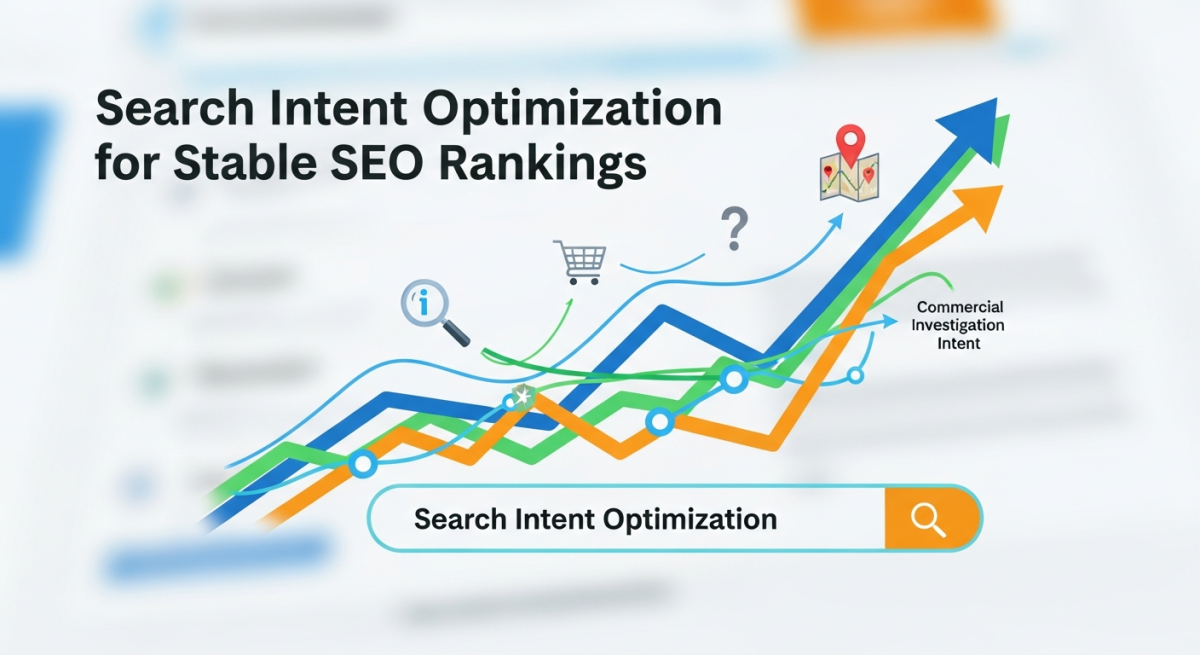
Search intent optimization is often the missing piece behind a frustrating pattern you’ve probably experienced: you publish a well-written, keyword-optimized article that briefly ranks—only to disappear from search results a few weeks later or, worse, never ranks at all.
Usually, the problem isn’t the quality of the content. It’s that the content doesn’t match the right intent.
I’m Zohanuddin Shaikh, an SEO consultant based in Karachi, Pakistan, with 8 years of experience. Search engines have moved far beyond simple keyword matching. Today, Google weighs how effectively your content satisfies search intent—the real reason someone is searching. That’s where search intent optimization becomes critical.
Modern SEO isn’t only about keywords; it’s about making sure your content matches what visitors actually expect to find. Done well, this leads to more consistent rankings, higher engagement, and long-term organic growth. This guide shows you how to identify, analyze, and apply search intent optimization so your content not only ranks well but keeps performing over time.
What Is Search Intent in SEO?
Search intent (also called user intent) is the reason behind a search query. In simple terms, it’s what the user actually wants.
For example:
- Someone searching “how to optimize content for SEO” wants a guide
- Someone searching “buy SEO tools” is ready to make a purchase
Both queries are about SEO, but they have completely different goals.
Google’s job is to deliver the most relevant result for each search. That’s why it evaluates more than keywords — it considers behavioral signals, content type, and context. One of the main reasons “optimized” articles fail is that they’re built around keywords instead of intent.
The Four Types of Search Intent
Understanding the different types of search intent is the foundation of effective optimization.
|
Intent Type |
What Users Want | Example Queries | Best Content Type |
|
Informational |
Knowledge or answers | “what is search intent”, “how to optimize content” | Blog posts, guides, tutorials |
|
Navigational |
A specific website or brand | “Ahrefs login,” “Google Search Console” |
Landing pages, homepage |
|
Transactional |
To take action or buy | “buy SEO tools” and “hire an SEO expert.” |
Product pages, service pages |
| Commercial Investigation |
To compare before deciding |
“best SEO tools,” “Ahrefs vs SEMrush” |
Comparison articles, reviews, listicles |
Matching your content type to the dominant intent is the single most important factor in whether it ranks and stays ranked.
Why Search Intent Optimization Matters for Rankings
Ranking instability — sites that climb and drop quickly — is one of the most common SEO problems. It frequently happens when content only partially satisfies what searchers want.
Google constantly tests how well content performs. If users:
- Bounce back quickly
- Don’t engage with the page
- Return to the search results to click another result
That signals your content didn’t fully meet expectations.
On the other hand, when your content matches intent precisely:
- Users stay longer
- More people engage
- Rankings stay stable or improve over time
This is why search intent optimization isn’t optional — it’s necessary for long-term SEO success.
How to Identify Search Intent: Step-by-Step
Step 1: Analyze the Search Results (SERP)
Search your target keyword and study the top-ranking pages. Ask:
- Are they blog posts, product pages, or videos?
- Are they beginner guides or advanced insights?
Google is already showing you what works for that query.
Step 2: Understand the Content Angle
Even within the same intent, content angles differ:
- “best SEO tools” → list-based comparison
- “SEO tools pricing” → transactional/commercial
Matching the angle is just as important as matching the intent.
Step 3: Look at SERP Features
Check for featured snippets, People Also Ask boxes, and video carousels. These indicate what format users prefer for that query.
Step 4: Use Keyword Modifiers
Certain words reveal intent quickly:
|
Modifier |
Signals This Intent |
|
“How,” “what,” “why,” “guide” |
Informational |
|
“best,” “top,” “vs,” “review” |
Commercial investigation |
| “buy,” “price,” “hire,” “deal” |
Transactional |
| Brand names |
Navigational |
These modifiers help you categorize queries at a glance.
How to Optimize Content for Search Intent
Match the Content Format
If the top results are blog posts, don’t create a landing page. If they’re product pages, don’t write a guide. Format mismatch is one of the fastest ways to lose rankings.
Align Content Depth
Intent Type |
Content Depth Needed |
|
Informational |
Detailed explanations, thorough coverage |
| Commercial |
Comparisons, clear evaluation criteria |
|
Transactional |
Concise, action-focused content |
| Navigational |
Direct, fast access to the destination |
Too much or too little detail for the intent can both hurt performance.
Structure Content Around Intent
Use headings that reflect what users are actually searching for. Answer the key questions clearly and early — don’t bury the main answer under 500 words of introduction.
Cover Secondary Intents
Users often have multiple related questions. Someone searching “search intent optimization” may also want examples, tools, and common mistakes to avoid. Covering these improves topical relevance and keeps users on your page.
Optimize Existing Content
Instead of always creating new posts, update underperforming ones—adjust the structure, improve clarity, and align better with intent. This often delivers faster results than publishing something new.
Common Search Intent Mistakes That Kill Rankings
Many SEO problems come from basic intent mismatches:
|
Mistake |
Why It Fails |
|
Using sales pages for informational keywords |
Users want answers, not a pitch |
|
Targeting multiple intents in one article |
Confuses both users and Google |
| Writing for search engines, not people |
Fails engagement signals |
| Ignoring what already ranks |
Google has already shown the winning format |
|
Padding content with filler |
Dilutes the core answer, increases bounce |
Even high-quality content won’t rank if it doesn’t match intent.
A Real-World Pattern of Search Intent Optimization
Consider a common scenario: a page targeting “best SEO tools.”
Before optimization:
- Generic article format
- No clear comparisons
- Weak structure
After optimization:
- Clear list format
- Feature comparisons
- Pricing breakdown
- Pros and cons
The result is typically higher engagement and better, more stable rankings. The difference wasn’t more content — it was better alignment with intent. This is the pattern I see repeatedly across audits: matching intent outperforms adding volume.
Search Intent and Content Strategy
Search intent isn’t just for individual pages — it should inform your entire content strategy.
When planning content:
- Group queries by their intent
- Build clusters around core topics
- Link related pages together with internal links
This creates a site structure search engines can easily interpret. It also prevents keyword cannibalization — when multiple pages compete to answer the same query. For a deeper process on this, see my keyword research guide.
Search Intent Optimization Checklist
Before you publish anything, ask yourself:
- Does this match the format of the top-ranking pages?
- Is the primary intent clearly satisfied?
- Are secondary questions answered?
- Is the structure simple to follow?
- Would a reader be completely satisfied after reading?
If the answer is yes to all of these, your chances of ranking improve significantly.
FAQs
1. What is search intent in SEO?
Search intent is the reason behind a user’s search query — what they’re actually trying to accomplish. It determines what type of content Google shows at the top of results. Understanding and matching intent is one of the most important factors in modern SEO.
2. How do I optimize content for search intent?
Start by analyzing the search results for your target keyword. Match your content format to what already ranks, align the depth to the intent (detailed for informational, concise for transactional), structure content around what users are searching for, and ensure you satisfy both primary and secondary questions.
3. Why is my content not ranking on Google?
Often it’s because the content doesn’t match search intent, even when it’s well-written. If you’ve created a detailed guide but the SERP shows product pages and comparisons, the intent is commercial or transactional—and your format mismatch prevents ranking regardless of quality.
4. What are the four types of search intent?
The four types are informational (seeking knowledge), navigational (finding a specific site), transactional (ready to take action or buy), and commercial investigation (comparing options before deciding). Each type calls for a different content format and depth.
5. What’s the difference between search intent and keywords?
Keywords are the words people type; search intent is the underlying goal behind those words. Two different keywords can share the same intent, and the same keyword can sometimes carry mixed intent. Optimizing for intent means satisfying the goal, not just including the keyword.
6. Can I target multiple search intents on one page?
Generally, no — targeting multiple primary intents on one page confuses both users and search engines, which usually hurts rankings. The better approach is one primary intent per page, with secondary related questions addressed within that same intent. Separate intents deserve separate pages.
Final Thoughts
SEO is no longer just about keywords — it’s about understanding users.
Search intent optimization is what separates content that briefly ranks from content that performs consistently over time. When what you write matches what people actually want, rankings stay stable more often, traffic becomes more valuable, and growth becomes sustainable.
If your content isn’t performing, don’t rush to rewrite it. First, reconsider the intent behind the query and whether your content truly matches it. That’s where real SEO progress begins.
For questions about applying search intent optimization to your own content, feel free to reach out through my Contact page.
For more SEO guides, browse Search Engine Realm.
Last Updated: June 2026