


SEO problems have changed. Search engine optimization has moved far beyond placing keywords correctly and building backlinks. Today, many websites adopt strong SEO techniques yet still struggle to earn stable rankings or steady organic traffic. The reason is simple: most ranking failures now come from SEO problems that aren’t visible on the surface.
I’m Zohanuddin Shaikh, an SEO consultant based in Karachi, Pakistan, with 8 years of experience. Based on my work with websites at various stages of growth, the most damaging SEO problems are rarely easy to spot. Pages may look good, content may be well-written, and technical tools may report “no critical errors”—yet rankings don’t improve. That’s because most modern SEO problems happen at the architectural, rendering, indexing, and interpretation levels, not at the surface.
This guide examines the complex SEO problems that quietly keep websites from ranking. These are issues that require deeper investigation and long-term fixes rather than quick patches—and understanding them is what separates sites that grow from sites that stall.
Why Modern SEO Problems Are Harder to Detect
Search engines are far smarter now than they were a few years ago. Google no longer evaluates pages one at a time. Instead, it assesses your entire site as a connected system.
What Google Evaluates |
Why It Matters |
| How pages connect to each other | Internal links signal structure and importance |
| How well a site can be crawled | Crawl efficiency affects what gets indexed |
| How people use content | Engagement signals reflect quality |
| How consistent signals are site-wide | Mixed signals reduce trust across the domain |
This means a single SEO problem can affect hundreds or even thousands of URLs at the same time. SEO tools don’t always alert you to these issues, which makes them especially hard for new and intermediate site owners to find. The problem isn’t a broken tag on one page — it’s a pattern repeated across the whole site.
Crawl Budget Misallocation
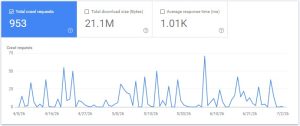
One of the most overlooked SEO problems is crawl budget wastage. “Crawl budget” refers to how many URLs search engines are willing to crawl on your site within a given timeframe.
When search engines spend most of their crawling effort on duplicate pages, low-value archives, parameter URLs, or auto-generated content, they may delay or neglect your most important pages.
Common causes of crawl budget waste:
- Excessive tag and category pages
- URL parameters created by filters
- Internal search result pages
- Poor pagination handling
I’ve seen websites with excellent content fail to rank because Googlebot didn’t frequently access their most important pages. Fixing crawl budget allocation usually improves indexing and rankings without changing any content. For a complete process, see my crawl budget guide.
Index Bloat and Zombie Pages
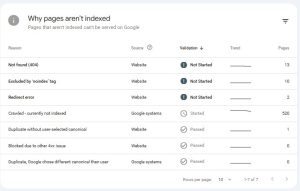
When a site has too many low-quality or useless URLs indexed, it creates index bloat. These pages lower the overall quality signals of a domain.
Common zombie pages include:
- Thin tag archives
- Irrelevant author pages
- Pages with no meaningful content
- URLs for ended campaigns
- Duplicate material across multiple pages
Search engines evaluate your whole site to judge its quality. Even if some pages are excellent, a large number of poor pages can reduce trust in the entire domain. The solution is to find low-value indexed URLs, decide whether to improve, consolidate, or remove them, and use noindex cautiously where needed. Index bloat rarely appears in basic audits, but it has a major long-term effect. For more, see my index bloat and zombie pages guide.
Rendering and JavaScript SEO Problems
Modern websites rely heavily on JavaScript frameworks. While search engines can render JavaScript, rendering doesn’t always happen immediately or correctly.
Common rendering issues:
- Content that loads only after user interaction
- Text and links that load slowly
- Blocked JavaScript resources
- Server-side and client-side rendering that don’t match
If search engines can’t reliably render your content, they may delay indexing, index incomplete pages, or misread your page structure. In my experience, JavaScript-related SEO problems are often the reason sites show up as “indexed but not ranking.” For a deeper look, see my JavaScript rendering guide and rendering delay guide.
Internal Linking Architecture Issues
Internal linking is more than adding links between posts — it defines how authority flows across your site.
Hidden internal linking problems:
- Genuinely important pages buried deep in the site structure
- Pages with no internal links pointing to them (orphan pages)
- Too many links to low-value pages
- Inconsistent anchor text
Internal links help search engines understand page importance, topic relationships, and content hierarchy. Poor internal linking can make even the best content underperform. For a complete process, see my internal linking SEO guide.
Canonicalization Conflicts
Canonical tags are meant to prevent duplicate content issues, but when implemented incorrectly, they cause serious SEO problems.
Common canonical mistakes:
- Missing self-referencing canonicals
- Canonicals pointing to non-indexable pages
- Conflicting canonicals across paginated URLs
- Canonical and internal linking mismatches
Canonical mistakes can cause search engines to ignore your preferred URLs, split ranking signals across duplicates, or leave important pages out of search results. Canonicalization problems are typically small but very powerful. For more, see my canonicalization SEO guide.
Pagination and Infinite Scroll Problems
Pagination helps users navigate large content sets, but it can confuse search engines if handled incorrectly.
Typical pagination issues:
- Page 2+ being indexed instead of the main page
- Duplicate content across paginated URLs
- Infinite scroll with no crawlable URLs
As a result, search engines may index the wrong pages, miss deeper content, or misinterpret the site’s structure. For a complete guide, see my pagination and infinite scroll SEO guide.
Core Web Vitals Trade-Offs
Improving Core Web Vitals is important, but aggressive optimization can introduce new SEO problems.
Risky optimizations include:
- Excessive minification that breaks content presentation
- Loading important content too slowly
- Removing visible text to improve speed metrics
Performance should enhance user experience — not compromise content visibility or accessibility. The goal is balance: a fast page that hides content from search engines isn’t actually winning. For more, see my Core Web Vitals guide.
Algorithmic Suppression without Penalties
Not all ranking drops come with manual actions or clear penalties. Some sites experience algorithmic suppression, where rankings slowly decline without obvious errors.
Possible causes of algorithmic suppression:
Cause |
What It Means |
| Redundant content sitewide | Too many similar pages dilute relevance |
| Insufficient topical authority | Not enough depth on the subject |
| Search intent misalignment | Content doesn’t match what users want |
| Over-optimization signals | Excessive keyword or anchor manipulation |
These situations need more than technical repairs — they require a strategic redesign of the content. Suppression is harder to diagnose than a penalty because nothing looks technically broken; the site simply stops climbing.
Search Intent Misalignment at Scale
Even well-written content can fail if it doesn’t match search intent.
Common intent misalignment scenarios:
- Informational content targeting transactional keywords
- Overly broad articles competing with more specialized ones
- Outdated formats for today’s SERPs
When this happens across many pages, intent misalignment can hide entire sections of a site from search. Matching content to the dominant intent for each query is one of the highest-impact fixes in SEO. For a complete process, see my search intent optimization guide.
Data Interpretation and False Positives
SEO tools provide data — but not context.
Common data interpretation mistakes:
- Acting on tool warnings without understanding them
- Treating recommendations as universal rules
- Ignoring site-specific behavior
In my experience, over-optimization — not under-optimization — causes many SEO problems. Tools tell you what exists; experience tells you what actually matters for your specific site. Blindly following every tool suggestion often creates new problems while trying to fix imaginary ones.
How to Diagnose SEO Problems Effectively
Instead of relying on checklists alone, effective SEO diagnosis follows a systematic process.
Step |
What to Do |
| 1. Analyze crawl behavior | Review crawl stats in Search Console |
| 2. Review index coverage | Track indexing trends over time |
| 3. Map internal linking depth | Find orphan and buried pages |
| 4. Compare rendered vs raw content | Check what Google actually sees |
| 5. Evaluate site quality holistically | Assess the whole domain, not single pages |
SEO diagnosis is about pattern recognition, not isolated metrics. A single warning rarely tells the full story, but a pattern across crawl, index, and engagement data usually points to the real problem.
Fixing SEO Problems Requires Strategy, Not Just Tools
Advanced SEO problems are rarely solved by installing another plugin, chasing more backlinks, or making isolated tweaks. They require a strategic approach.
Real fixes come from understanding how search engines interpret your site as a whole:
- Clarifying the site’s purpose and focus
- Building a clear content hierarchy
- Consolidating overlapping or redundant content
- Aligning every page with genuine search intent
- Strengthening internal links to important pages
- Ensuring content renders reliably for search engines
The pattern across all of these is the same: reduce confusion and increase clarity. Search engines reward sites they can easily understand, crawl, and trust.
How SEO Problems Affect AdSense and Monetization
SEO problems don’t just affect rankings — they can also affect monetization goals like AdSense approval.
Websites that are hard to crawl, have thin content, or contain many low-quality pages may struggle to get indexed properly. This can make a site appear lower quality during review. A clean structure, useful content, and strong SEO fundamentals improve both your search visibility and your chances of AdSense approval.
In other words, fixing SEO problems isn’t only about rankings—it’s about building a site that search engines and ad networks both recognize as trustworthy and valuable. The same clarity that earns rankings also earns approval.
FAQs
1. What are the most common SEO problems that prevent ranking?
The most common hidden SEO problems are crawl budget misallocation, index bloat, JavaScript rendering issues, weak internal linking, canonicalization conflicts, pagination errors, and search intent misalignment. These rarely show up as obvious errors in tools, but they quietly prevent good content from ranking by confusing how search engines crawl, render, and interpret a site.
2. Why is my website not ranking despite good content?
Good content often fails to rank because of technical and structural SEO problems — not content quality. If search engines can’t crawl your important pages efficiently, can’t render your content reliably, or can’t understand your site structure through internal links, even excellent content underperforms. The fix is usually architectural, not editorial.
3. Why is my content indexed but not ranking?
“Indexed but not ranking” often points to search intent misalignment, weak topical authority, or algorithmic suppression. The page is in Google’s index, but it either doesn’t match what users want for the target query, lacks supporting content depth, or competes with stronger pages on your own site. Rendering issues can also cause partial indexing.
4. How do I find SEO problems on my website?
Use Google Search Console crawl stats and index coverage reports, analyze internal linking depth, compare rendered versus raw HTML, and evaluate site quality holistically. Look for patterns across indexing, crawling, and engagement data rather than isolated tool warnings. SEO diagnosis is about pattern recognition, not chasing individual metrics.
5. Are SEO problems more important to fix than building backlinks?
In many cases, yes. Backlinks strengthen existing signals, but if a site has unresolved SEO problems, building links alone may not work. Fixing fundamental issues like crawlability, rendering, and internal structure often improves performance even without aggressive backlink building — because you’re removing the barriers holding your content back.
6. Do SEO problems affect AdSense approval?
Yes, indirectly. Websites that are hard to crawl, have thin content, or contain many low-quality pages may struggle to get indexed properly, which can make the site appear lower quality during review. A clean structure, useful content, and strong SEO fundamentals improve both search visibility and your chances of AdSense approval.
7. How long does it take to fix SEO problems?
It depends on the problem. Technical fixes may start showing results within a few weeks, while structural or content-related SEO problems can take a few months to fully resolve. SEO isn’t a quick fix — search engines re-evaluate sites over time and gradually reward those that address their underlying issues.
8. Are SEO problems permanent?
No. Most SEO problems can be resolved with the right strategy, time, and effort. Search engines continuously re-evaluate websites, and over time they typically reward sites that fix their problems. The key is diagnosing the real underlying issue rather than just patching surface symptoms.
Final Thoughts
In my experience, the worst SEO problems aren’t technical mistakes—they’re structural misconceptions. Search engines see websites as ecosystems, not just collections of pages.
Fixing advanced SEO problems comes down to clarity: clarity of the site’s purpose, a clear hierarchy of content, and consistent alignment with search intent. Modern SEO isn’t about manipulating rankings anymore — it’s about making it easier for search engines to interpret your material.
The websites that focus on being clear, consistent, and high-quality earn trust, and rankings follow. When you stop treating SEO as a checklist of isolated fixes and start treating it as the discipline of making your site understandable at scale, the hidden problems that once blocked your rankings become the very areas where you build lasting competitive advantage.
For questions about diagnosing SEO problems on your own site, feel free to reach out through my Contact page.
For more SEO guides, browse Search Engine Realm.
Last Updated: July 2026